John Simpson travels to Afghanistan to capture the true picture of war
Andrea Bell
Staff Writer
Professors are widely talked about on campus, whether students should take classes with a certain one, who is great professor, and who is just down right terrible. Among all the chatter, one professor that stands out is John Simpson.
During the last few weeks of winter quarter, while students were stressing over the last minute details of their finals, Simpson’s classes had wrapped up early, and the professor was nowhere on campus. Simpson was embedded with a troupe to Afghanistan on his eighth embedment since 2005.
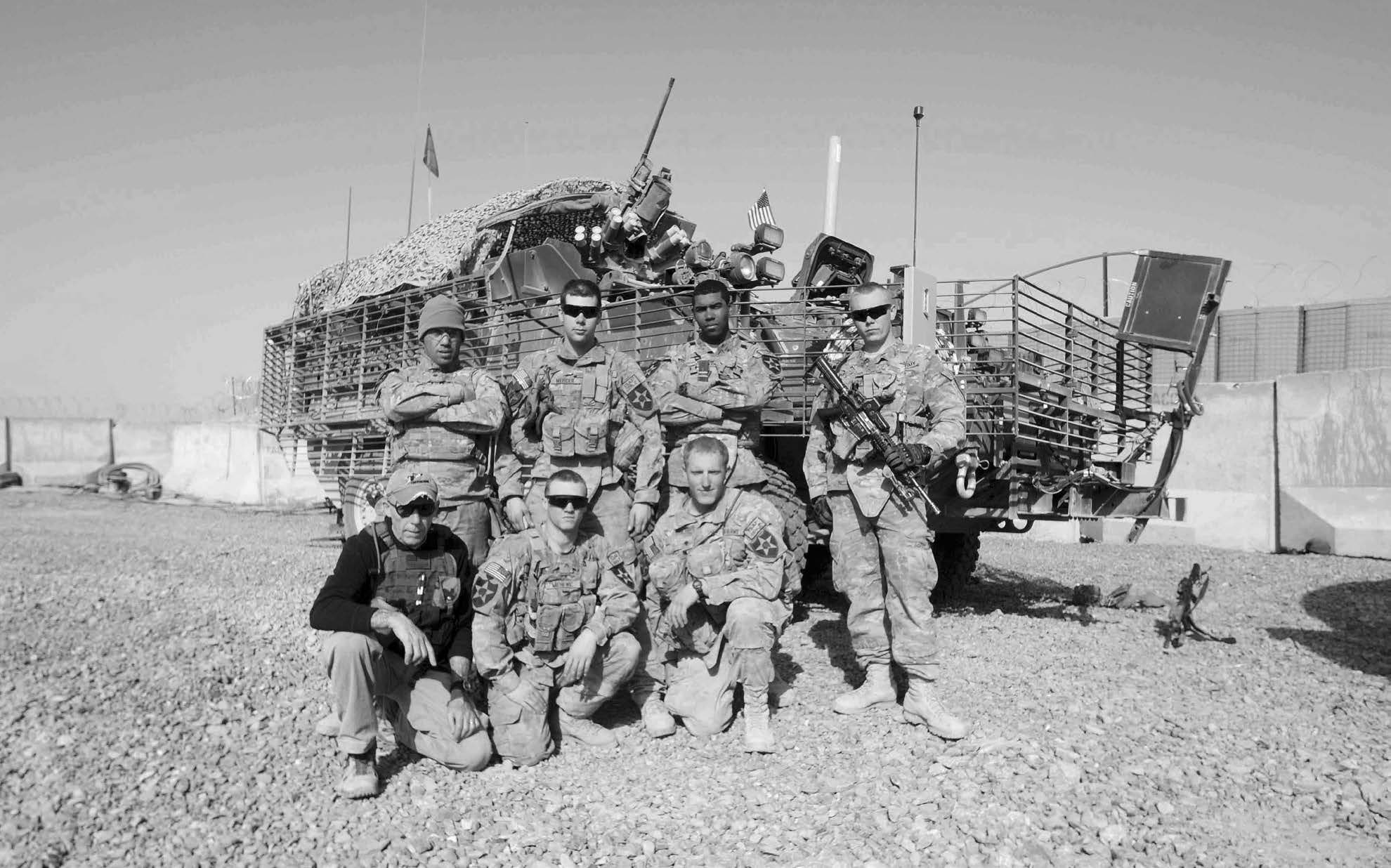
Simpson has gone to Afghanistan three times, and Iraq five times, as a photojournalist reporting on the on going war. Although, only gone for three weeks to two months, it takes a lot more time to prepare.
“It is hard to actually embed with the troops,” Simpson explained. “It takes approximately six months to get ready for the embedment,” Simpson said.
From filing paper work to getting in shape, a lot of work that needed to go into preparing to go into a war zone.
“Going into a combat zone, you are putting your life on the line,” Simpson said.
Simpson is a hands on photojournalist, he puts himself into the same situations as the soldiers he is working beside, to produce the best quality picture, to tell the story.
“I want to be an asset not a liability,” Simpson explained.
Simpson goes on training missions with the soldiers so he is in peak physical shape for his embedment, Simpson also trains and runs with weights. He does this because on top of the battle armor he also carries two cameras with him. Both are Nikons, one with a wide-angle lens and one with a medium telephoto lens.
Before an embedment Simpson takes time to get to know the leadership in the troop he will embed with. This gives him a sense of whom he will be working with when he embeds. It also gives them a chance to meet him as well. In the situation both parties are putting themselves in it is best to eliminate any surprises.
Despite the popular belief that Simpson, as he preaches in his classes, is only 27 years old, he has been working in photojournalism for 20 years. He has worked for publications such as “The Ranger”, “The News Tribune”, and publications as big as “USA Today”.
Simpson, retired Air Force veterans decided embed for his first time to Iraq in 2005.
“I wanted to see if I could do my career of photojournalism, under the pressure of a combat situation,” Simpson said.
Photojournalism takes thought, to get the right angles, and capture the essence of the situation.
However with risk there is reward. Simpson puts himself in the combat situation to help tell the story of what the soldiers are experiencing.
“The most rewarding part of the job, is knowing what I have done has, perhaps, made a chapter in history more clear,” Simpson said.
“But on a personal level, the most rewarding part is when every man comes back from a mission,” Simpson explained.
As one of the down sides Simpson talked about having to see the loss of a human life.
Anyone who has taken one of Simpson’s classes knows he is quick to make challenges, however this job isn’t one he would recommend. He explained the trade off and how it isn’t just hard on the journalist, how it is also hard on their family.
“You trade a large part of your soul when you do this kind of photojournalism,” Simpson explained.
Although Simpson has embedded eight times, everything must draw to a close, as he does not plan of embedding again. However, he is very appreciative of how his fellow staff on campus has helped to make the process of embedment easier, these people being, Mike Parks, Jude DeJardin, Carol Greene, Greg Barizell, and Judy Anderson.
Although this line of work is hard it never stopped Simpson from doing what he set out to do, He puts in the work to get something back; he hasn’t had any of this just handed to him.
“Whatever you want to do, do it. Don’t ask, just do, and learn as much as you can,” Simpson said.