 Rate increases averted for student loans
Jacquelyn Edwards
Staff Writer
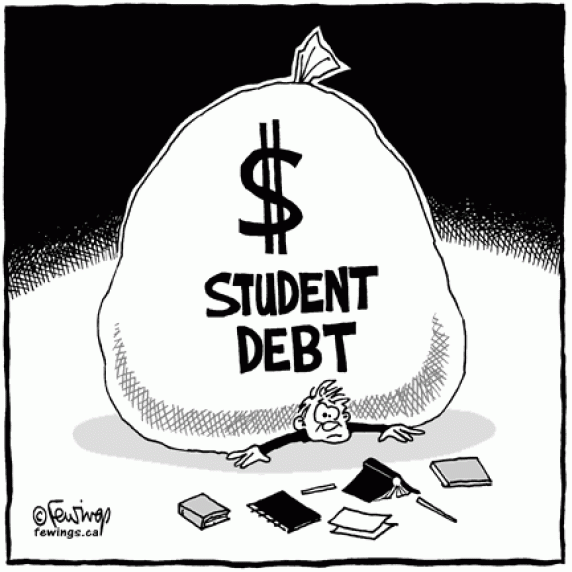
College, four years of undergraduate work that results in a diploma articulating the work the student has done over the course of their education. What that educational diploma does not state is the accumulated amount of debt the student incurs.
At the moment federal student loans, which were being held at a low 3.4%, will revert back to 6.8% for the 2012-2013 school year that began on July 1. This means that every student at Pierce college taking our Stafford and other federally subsidized loans which will make paying off this year’s tuition harder.
Freshman just starting out will feel the hit the biggest. Assuming rates are 6.8% the next four years, students borrowing the maximum $23,000 in subsidized loans during college would pay an extra $38 a month after graduation. Over the standard 10 year repayment period, according to Financial Aid, that is an additional $4,600 in interest.
For some students this means the difference between keeping their associates or transferring on to a better school. Sara Adams has wanted to attend Stanford University since she was a little girl and she was lucky enough to be accepted for Fall Semester of this year. However, the $55,000 a year tuition plan is pricey and her scholarships and grants leave her $13,000 dollars short a year. For Sara this means incurring debt for the first time in her entire life.
“I have done so well keeping out of debt,” Sara says. “My family was always the kind of family who got in large amounts of trouble when given a credit card to spend. I can proudly say I am different.”
Sara will have to wait a full semester for another scholarship to become available and even then she must beat out the thousands of students who are applying for it.
However, there are other students who won’t let money be an issue. Brian Jacobs is not willing to let a little thing called loans get in the way of going to Pacific Lutheran University.
“I am a first generation college student,” Brian admits proudly. “I know how much money I am going to have to take out to go to PLU, but I also know that in the end it will be worth it.”
Luckily for both Sara and Brian, the loan hike was barely averted and will once again will remain at 3.4% for an extended amount of time. Federally, the rate freeze at 3.45 came at a cost. Congress had to find $6 billion to pay for it, according to a press release. Passage of the one year extension is an important step toward making college more affordable. But colleges, and state and federal lawmakers will need to do more over the next year to ensure that students aren’t plunged deeper into debt.
The lingering national recession has led to weak state economies, which in turn have squeezed college budgets across the country. That has resulted in tuition hikes and fee increases, which translates into more student loan debt, and the situation is not going to improve in the near term.