What once sounded futuristic, typing a few words to generate a detailed image in seconds, is now widely accessible.
As technology develops, though, it raises important questions about the future of originality, emotion, and creativity.
For many people, the conversation begins with their first AI encounter. When asked about their initial impression of AI-generated art, some say they first saw it as a tool and then became aware of its problematic and ethical issues. Like many, their response reflected a mix of curiosity and uncertainty.
What once felt experimental has quickly become part of the creative mainstream, showing just how fast the technology and the conversation around it have evolved.
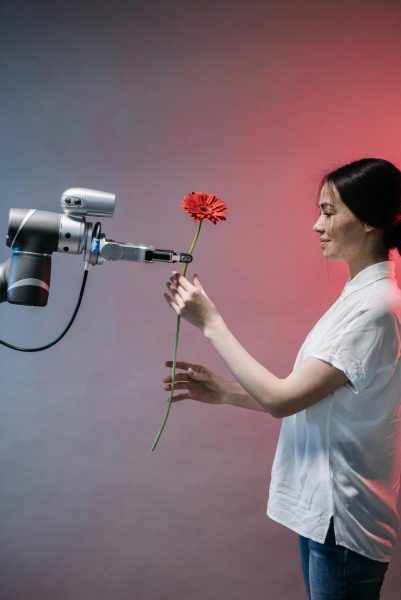
As AI continues to evolve, it’s clear that technology is doing more than changing how art is made; it’s reshaping how creativity itself is defined. In a world where machines can generate artwork in seconds, one question remains: what does it truly mean to be an artist?
Professor Jennefier Emswiler explained that the best way to experience AI usage in everyday life is to know how to ask the right questions, even when just stumbling across AI-generated work.
These experiences continue to highlight a growing reality: even people who aren’t actively seeking AI art are likely to engage with it in some way.
Beyond ethics lies a more philosophical question: can AI art feel human? It is argued that while AI could perceive emotion, it could never produce it; it could never create emotion.
Professor Jennefier Emswiler explained that the best way to experience AI usage in everyday life is to know how to ask the right questions, even when just stumbling across AI-generated work. These experiences continue to highlight a growing reality: even people who aren’t actively seeking AI art are likely to engage with it in some way.
Beyond ethics lies a more philosophical question: can AI art feel human? It is argued that while AI could perceive emotion, it could never produce it; it could never create emotion. Either way, the discussion challenges long-standing ideas about what gives art its power.
This naturally leads to questions about transparency. Should AI-generated work be clearly labeled in galleries or competitions?
“Yes, it’s no different than saying you created something with paint or graphic design; there’s an amount of deception if you are not straightforward,” Emswiler said, even suggesting the idea of an AI watermark.
But if it’s still not for you, a good way to avoid creating AI-generated habits is to find less digital hobbies, such as painting, sewing, jogging, and much more.
As AI continues to evolve, it’s clear that technology is doing more than changing how art is made; it’s reshaping how creativity itself is defined. In a world where machines can generate artwork in seconds, one question remains: what does it truly mean to be an artist?
While labeling could build trust with audiences, it also raises questions about fairness and how AI-assisted work should be evaluated. Looking ahead, the future of AI in art appears to balance excitement with uncertainty. If you want to learn how to identify AI-generated art, the best place to start isn’t by ignoring it but by being curious and learning all the right questions to ask.