Walking in a whiskers wonderland
 The holidays are upon us, and it is a time for giving—and one of the busiest adoption seasons for shelters. Yet for the Tacoma Humane society, it’s a Whisker Wonderland.
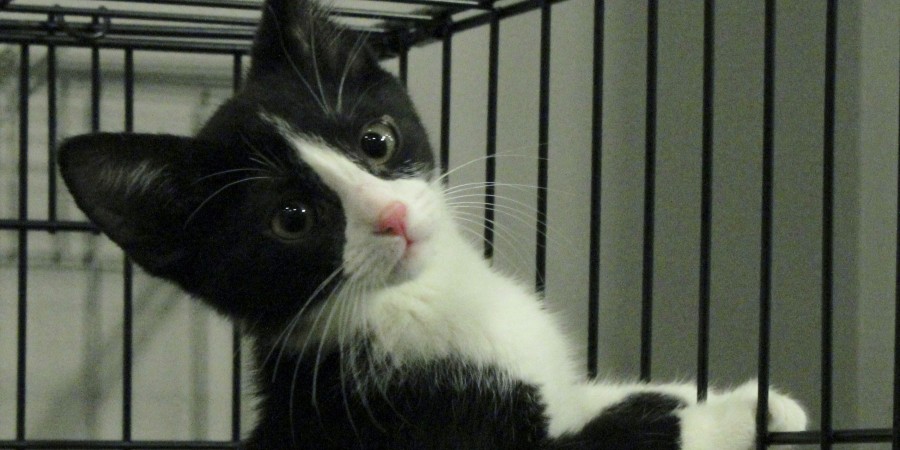
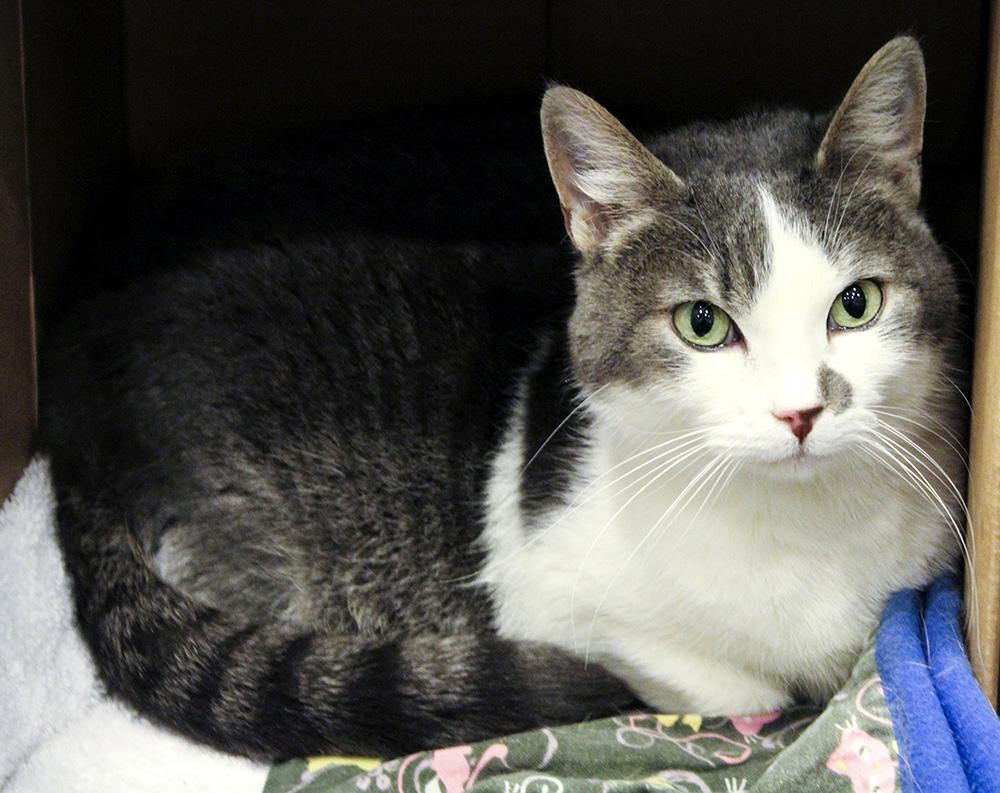
When passing by Fuego, many people can stop by the gated lot and marvel at little Josie—the little black and white kitten—along with several of her friends Scamper, Oreo, Daisey, and Frankie. Many people came looking for a potential friend of the family and were not disappointed. Kim Archer, a volunteer for over two years says,
“We get on average 15-25 cats for adoption on any given time. In the summer our cateries are getting full. May through November is high kitten season, weather warms up, animals are feeling healthy, that’s just the natural breeding time for cats. We have gotten to where we move cats out within 5-10 days.” A tremendous accomplishment, considering how that is about as much time as a cat would usually have to wait for adoption.
From about 2-3 pm, over five cats were already adopted and were given new homes. However, none of this would have even been possible if it weren’t from donations. “We could not function without the volunteers. So whatever little bit of help we get is very important. Every penny that people give is important.” says Archer.
Whiskers in Wonderland was proof of that. Supported by sponsors such as Bruce Titus Subaru and the Law office of Matthew Rusnak, the shelter was able to rent out a space at South Hill mall for the entire first weekend of December.
Events like these are not only beneficial towards mass adoptions, but also as a way to advertise future donation contributors. Dave Albertson, a volunteer for over 3 years, explains just how much of an impact donations have on the shelter. “This year the dog-a-thon raised $100K in one day.” Although the Tacoma Humane society is a non-profit organization, they still need funding for things like food, toys, kennels, medicine, etc. That makes up for a lot of dog treats.
Yet even with these events, the Tacoma Humane society can’t do anything without their volunteers. “We need more volunteers, all the time.” Says Albertson, “I walkdogs once a week, but there’s not enough people to walk them.” Kim Archer also says, “It’s thousands of hours worth of time given, with hundreds of volunteers.”
Lack of volunteers are a chronic problem for shelters, given that many shelters still carry the dark “pound” stereotype. There are rumors that shelters have a very high kill-rate, and just want to “make room.” However this is not the case, “The only animals that get euthanized are the ones brought in sick, or are unadoptable because they’re too vicious. We keep dogs for 6-8 months, then send them to the rescue team or people who foster.”
Volunteering at the Humane society has many rewarding benefits, such as resume building, volunteer hours—and as Volunteer coordinator Alex Ropes put it, “a way to show your employer you’re more than just a paycheck.” Newest volunteer Sally Burke joined the shelter only 3 weeks ago and exemplifies what effect volunteering has on people. Recently recovering from the loss of her cat she says, “I’m glad to pitch in. It’s meaningful to me, what would matter to me. This has been kind of a way to remember her, you know. With retirement it’s nice to do something you enjoy.”
In fact, there are many ways a person can contribute to the Humane society. According to www.humanesociety.org, many people can coordinate special events, preparing for the “Dog-A-thon” or Whiskers in Wonderland, “Bath brigade”, where people bathe and groom the shelter animals, fostering animals so that they’re ready to adopt, the Spay/Neuter project, where people assist low-income Pierce county residents with spaying or neutering their pet, and website photography, where people can upload photos of the shelter animals on the Humane society’s facebook and/or website.
People can also get involved with “Trap-Neuter-Return,” which supports the cat community and helps lower the pet population. In order to become a volunteer, people need only to check out the website listed above, look at what orientation works best, then fill out an online form. After the orientation, people only need to look into future classes, and then build off from there. It should be noted that Volunteer hours do not count until new volunteers meet the 6 hour/monthly commitment to the program for 6 months.
For further information on classes and hour requirements, visit www.humanesociety.org.