Tacoma Art Museum
-
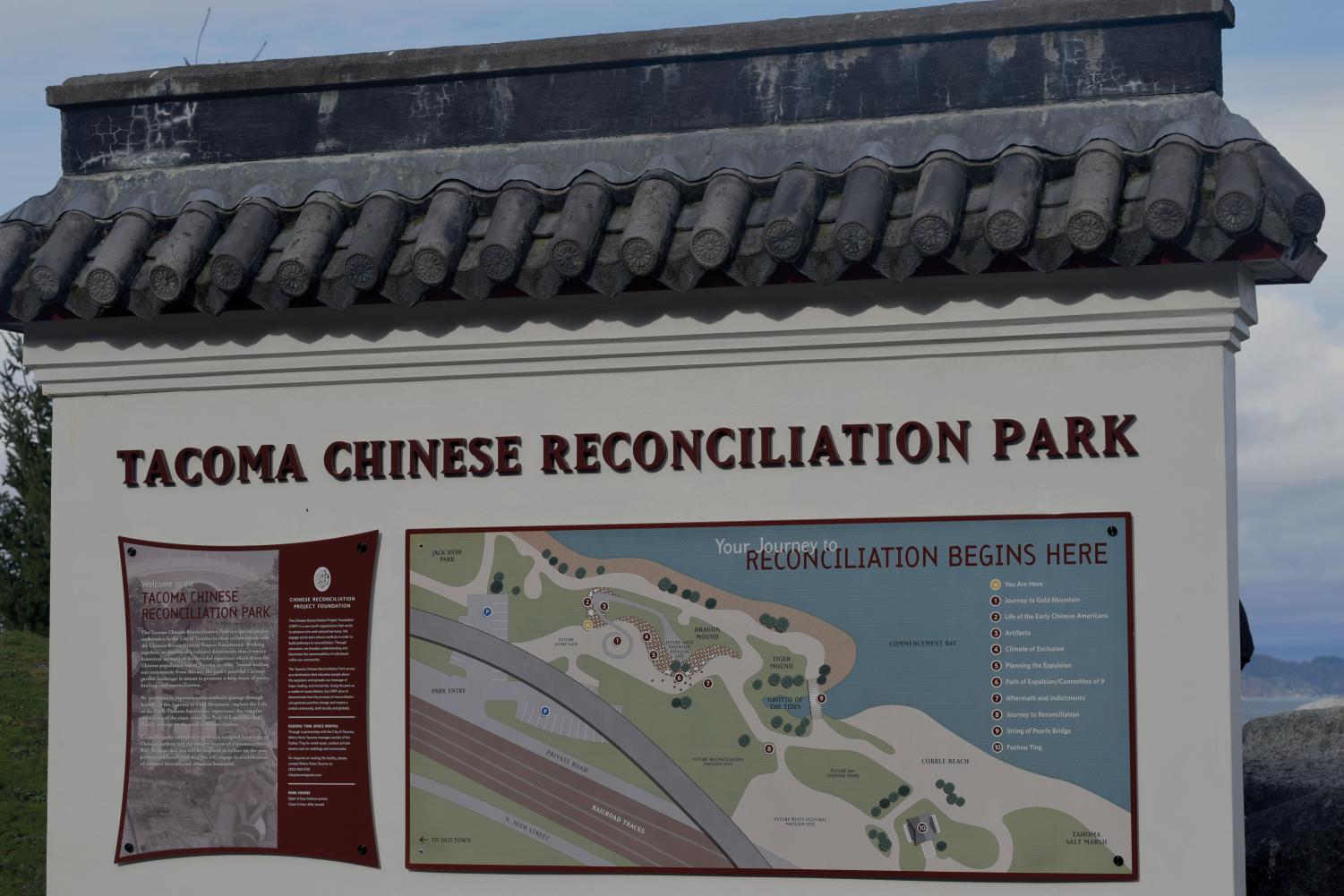
Map of Tacoma Chinese Reconciliation Park
-
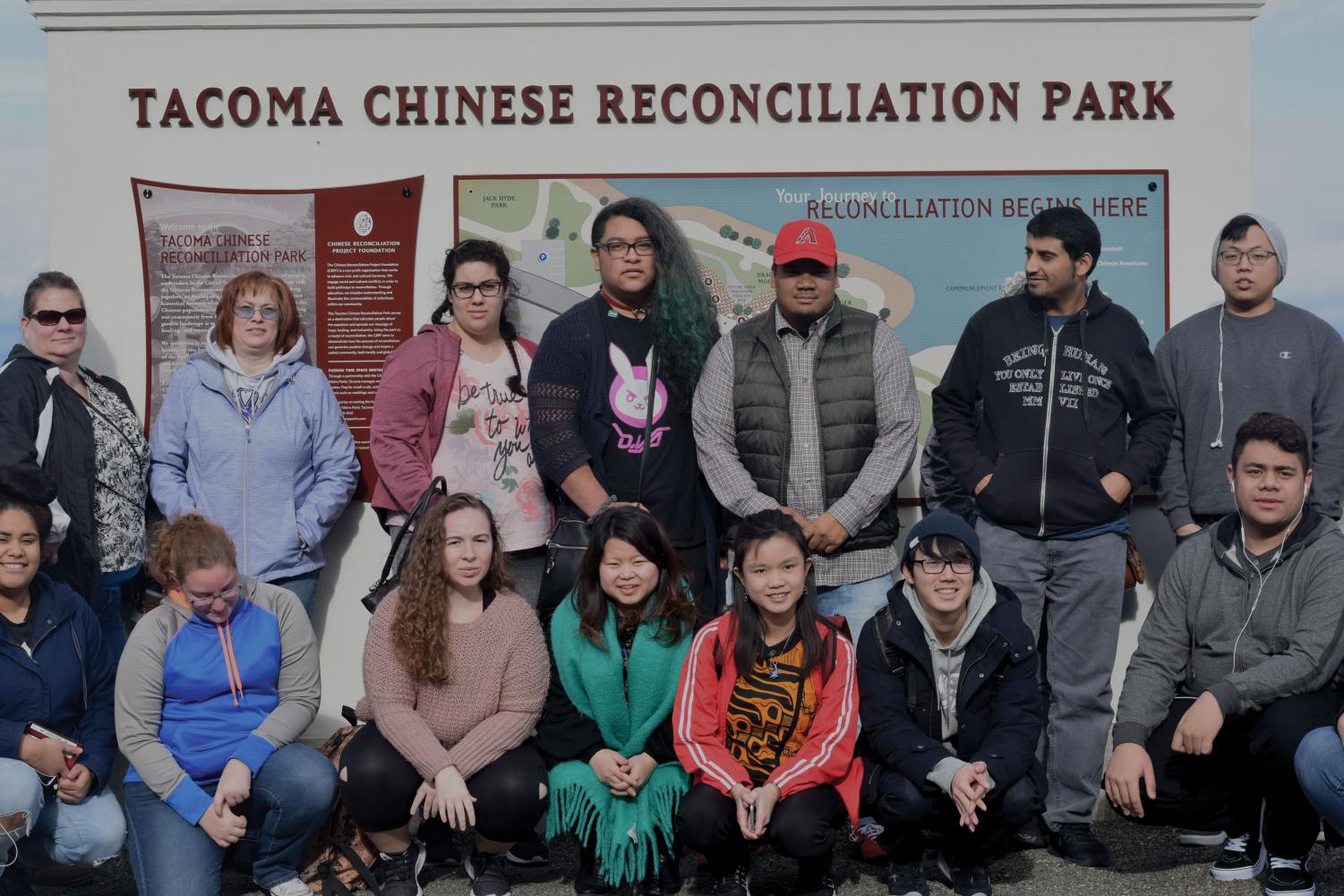
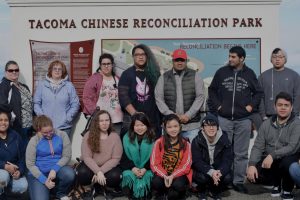
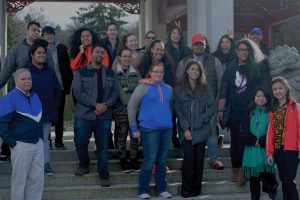
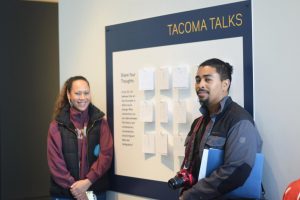
Members of the Aspire club and Pierce College students
-
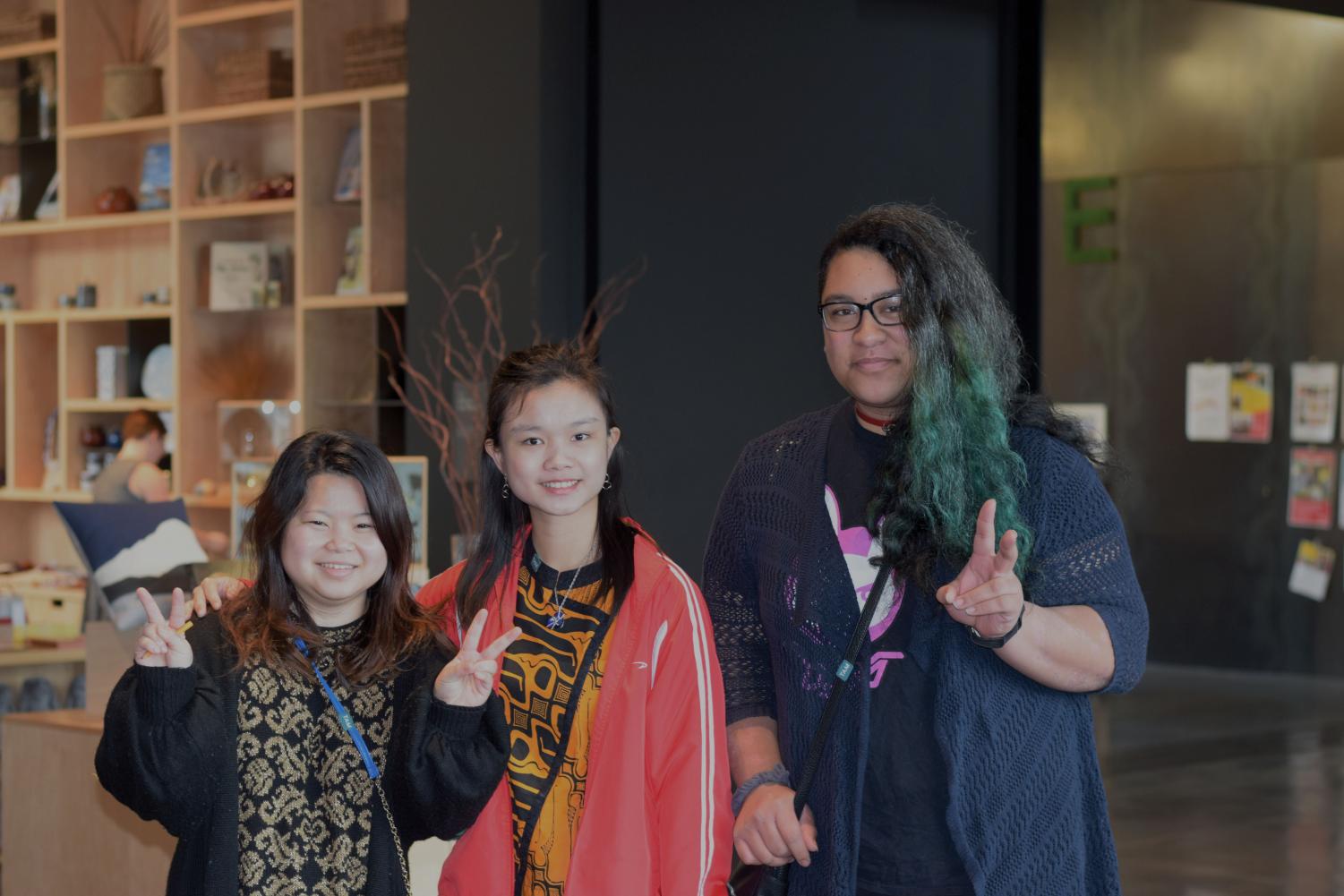
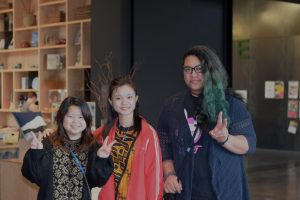
(left to right) Suyoung Park, staff writer; Beatriz Cendana , freelance writer and illustrator; Lorelai Watson, staff designer at the TAM
-
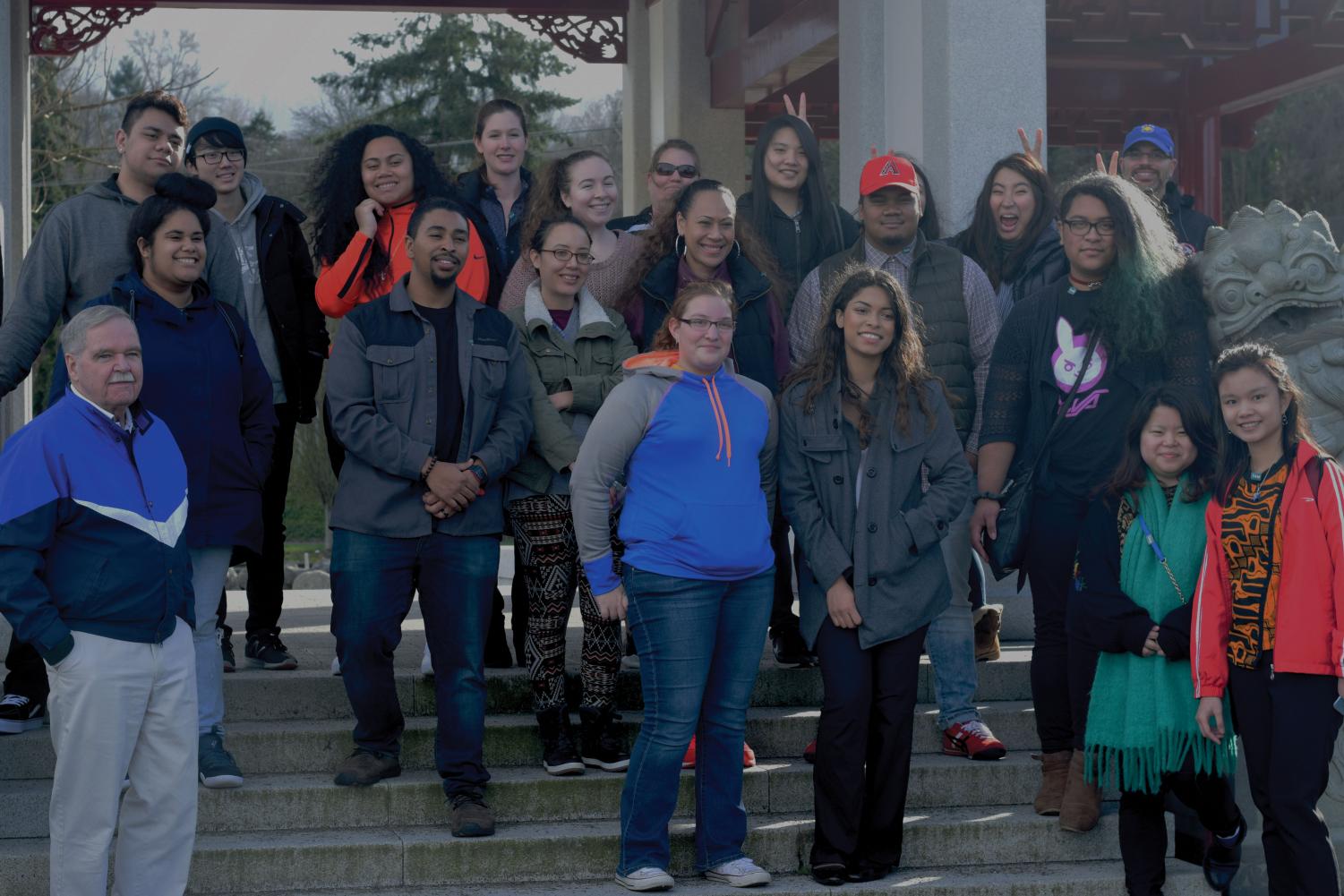
Members of the Aspire club and Pierce College students
-
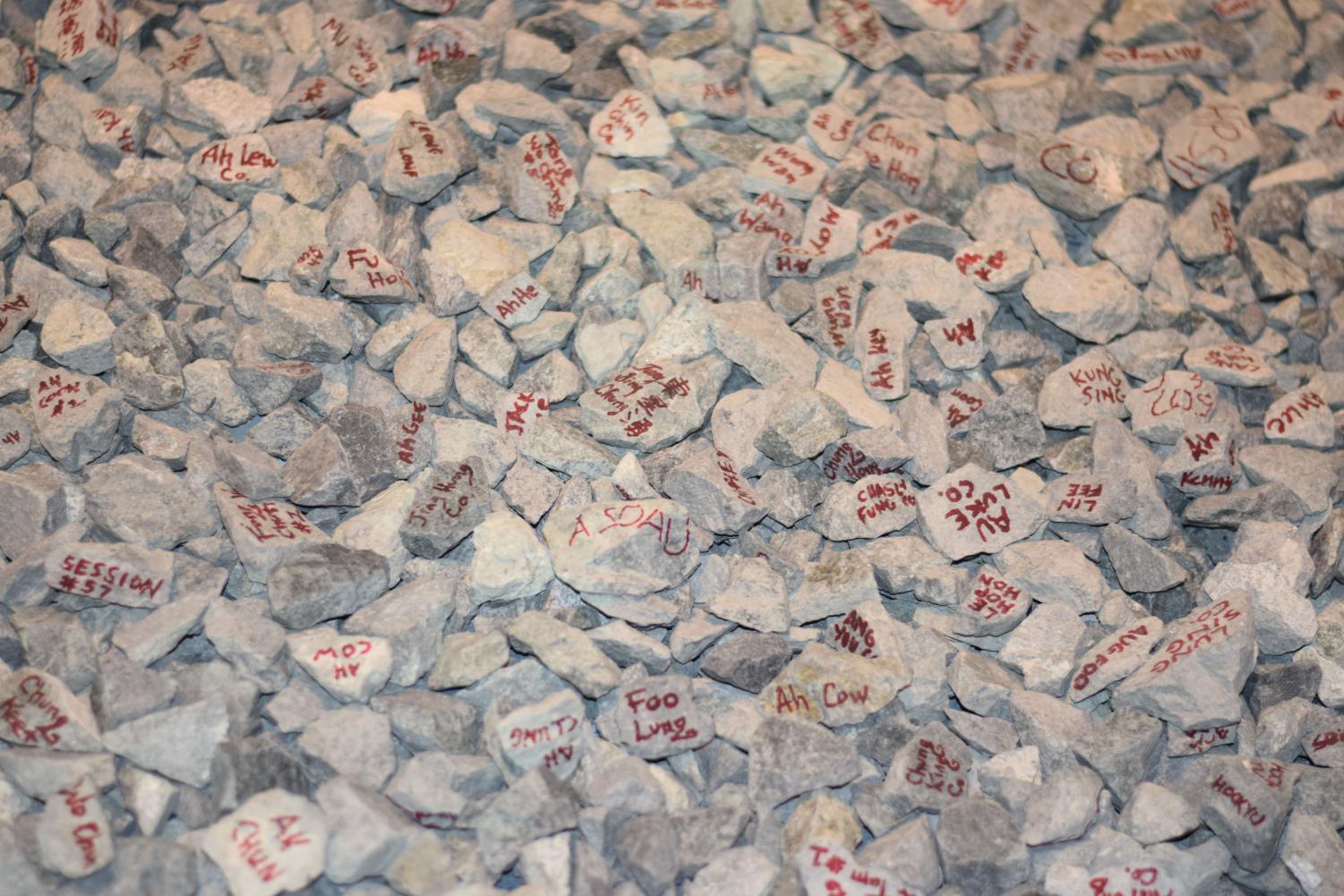
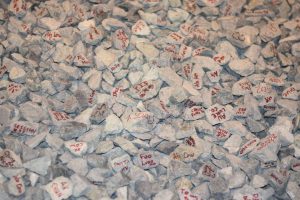
Zhi Lin’s “Chinaman’s Last Chance” on Promontory Summit: Golden Spike celebration, 12:30 p.m. May 10, 1868; rocks simulate the shale that is used to line railroad track. Each one has the name of a company in China that sent workers over to work on the railroad.
-
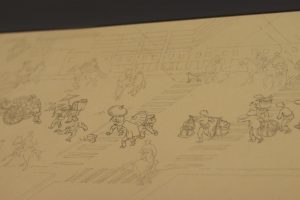
“November 3 Along Pacific Avenue in Tacoma” Lin’s pencil drawing depicting the Chinese being run out of town. Drawing is on parchment paper measuring 35 ft. “

-
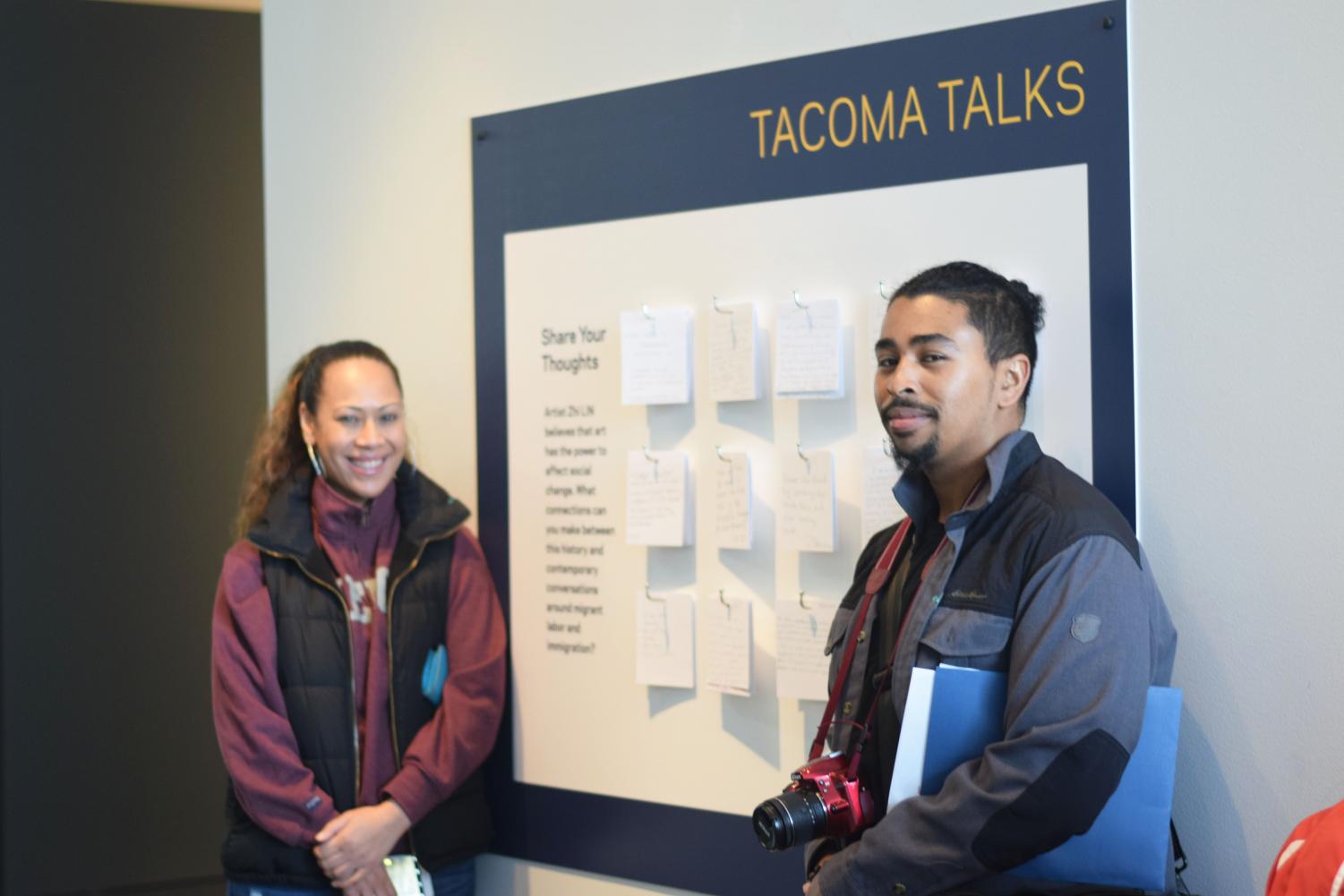
Dawn Reed, Director of Aspire, Trio and Upward Bound, with Aki Smith, Retention Manager of Aspire
-
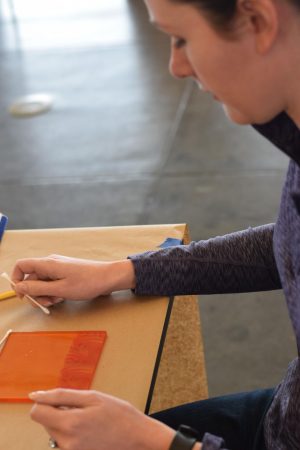
Julia Woodworth, Program Specialist for International Education finds her zen in ink painting

-
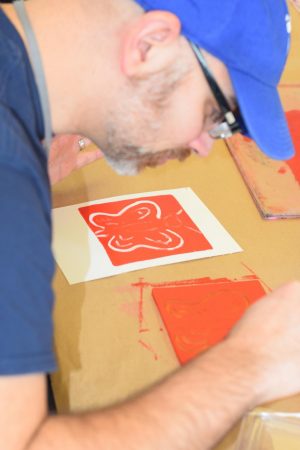
Cameron Cox, Student Life Program Director shows off his artistic talent

TAM Exhibit Offers a Place of Restoration and Reconciliation
By Lorelei Watson
Staff Writer
Railroads: an integral but oft forgotten mode of transportation. For many, they are merely reduced to background noise but to some they mean more than that.
Forged in the 19th century, the transcontinental railroads were built largely due to Chinese immigrants, many of whom were originally looking for luck in the form of the California gold mines. After years of hard work, they were met with guns and chased out of Tacoma. This act of expulsion effectively erased them from the area’s ecosystem and its history.
At artists named Zhi Lin, however, has taken on the task of remembering the struggle the Chinese railroad laborers faced. Through art he gives light to a history that has long been buried. His unique perspective honors their individual struggle and history by omitting specific facial features from his depictions. In doing so, he is able to show the immigrants as a whole instead of just one or two people.
One particular piece that struck me was the video-art installation. From wall-to-wall, in front of a recorded reenactment of the end-of-railroad-building celebrations were the names of the Chinese laborers painted on ballast (rocks). The eerie feeling one gets from the juxtaposition of cheerful celebrations taking place above tracks that forgotten Chinese laborers bled and sweat on is bone-chilling.
This story, however, doesn’t end on a grim note. The non-profit Chinese Reconciliation Project Foundation, aims to reach “civic harmony” largely through education and the Chinese Reconciliation Park. They have provided an excellent place for people of all walks to come, learn, reflect, and connect with the each other. They are choosing not to forget what happened but rather to learn and grow from it. This is what the railroads represent.
___________________________________________________________________
Field Trip Review – Tacoma Art Museum and Tacoma Reconciliation Park
By SuYoung Park
Staff writer
From my own experience, being a South Korean in Northwest Seattle area gives me some unique perspectives.
The YouTube brought K-Pop craze in my generation, the millennials, and the Generation Z. The efforts of former Presidents of South Korean Park and Lee as they spent millions of dollars to promote and globalize Korean foods helped my culture become more appealing than it used to be.
Now, I rarely hear anyone saying, “where is Korea?” But more often hear, “I love BTS! I love Kim-Chee!”
Before Bruce Lee, before J-Pop and K-Pop, there were Chinese immigrants whom came here before my generation, explored and cultivated this land so I could live comfortably. In fact, there are many generations in the U.S. who are benefiting from them and yet their stories seemed to be blotted out from history.
The events of WW II and Pearl Harbor also created a stigma for Asian Americans. 2nd & 3rd generations grew up not connected to their ancestral history because their parents could not or would not talk about their experiences or where they came from. They did everything possible to assimilate into American culture.
Therefore I was grateful and appreciated how the ASPIRE club, Student Life, and International Education came together to organize this trip. They succeeded in bringing awareness and recognitions regarding Asian immigrant history and how it affected the local area.
As I was walking through Zhi Lin’s art exhibition intended bring to mind of those whom died without recognitions, rather forgotten of their existence, I was struck by the images on the walls.
One piece of artwork that stood out for me showed a tunnel opening into the side of a mountain and beyond the landscape dropped into a valley. As an artist, I admired the piece, but then became very sad as I learned of what happened to the Chinese laborers at the Donner Summit. I saw contradicting images on a drawing intended to show white settlers a glorious scenery, but I the faces of the “Orientals and Exotics” as they were burnt to into ashes from the unstable with dynamite that was used to make tunnels.
It was a rather humbling experience to realize how privileged I am compared to where they were.
Going to Tacoma Reconciliation Park as a last trip of the day was uplifting. It was as if I was being imparted with wisdom from the elders of from ancient temples. It was a reminder of hope, past was past but should be taught and remembered with purpose. It is not only to be mourned over, but rather to recognized and reminded.
I have privileges of well-being and freedoms that were given to me I now appreciate more. I am humbled to know what I have, yet also enjoy my community. We continue to learn from one another so that we are given a moral guidance to not to create another forgotten face.
Today, the fear of oriental people and the exotics seems to be fading away, yet I hope that we will remember what has happened.