Mental health and its stigma
False facts, cultural misconceptions harm society’s perception
Society has received many messages about mental health that are surrounded in negativity. The news, social media, video games, movies, or TV shows all show portrayals of many different people, including those with mental illness.
Biological factors, such as genes, brain chemistry, experiences of trauma, and family history regarding mental health problems are some of the common contributors, according to WebMD.
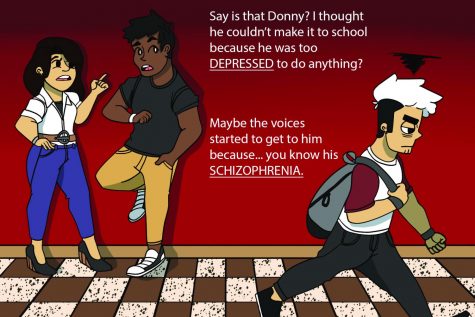
According to the National Institute of Mental Health, depression affected about 16.2 million (6.7 percent) of people in the United States in 2016. It’s one of the most common mental illnesses in the US, yet there’s much self-stigma among those with depression. There’s a perception that people with depression are weak. According to Australian mental health site Beyond Blue, someone who has depression may believe that they are responsible for their condition and should be able to control it. They may feel guilty or embarrassed by their disorder.
Megan Irby, counselor at the Pierce College Fort Steilacoom campus, recognizes the perceived stigma among people with mental health problems. Familial and cultural ties have an impact, along with the media.
“I find that many students discuss how their family or cultural background influence their ideas of mental health such as not wanting to access mental health care because they have been socialized to believe ‘only crazy people go to counseling.’ There are many cultures that believe people should only access support within their family or church, for example, and this can sometimes lead to people not getting the professional mental health care they need because of the fear of being shamed or ostracized from their family,” she said.
One of the reasons many people don’t go to treatment is because of fear and shame, according to Kentucky psychologist David Susman. People recognize negative stigma and don’t want to be labeled “crazy,” Susman wrote.
Many myths surround mental illness. According to the U.S. Department of Health and Human Services’ mentalhealth.gov, there is a misconception that people with mental health needs cannot handle the stress of a job. The reality is that these people are just as productive as anyone else, the site said. There is also the public idea that mental health problems make people weak, and that they can just “snap out of it.”
According to the British Association for Psychopharmacology, Peter and Isabelle Haddad said one of the most common and damaging misperceptions is that people with schizophrenia are violent. The truth is that less than 10 percent of violent crime in society is linked to schizophrenia. Actually, it is more likely that a person with schizophrenia would be a victim of violence, according to the Haddads.
A recovery-oriented mental health care website, rtor.org, points out another example of this in a recent film, “The Visit.” The film is about two elderly people who have schizophrenia and have escaped psychiatric care. According to its commentator, Veronique Hoebeke, while this in and of itself is not bad, the way that director M. Night Shyamalan portrayed the mental illness was incorrect and fear-inducing to viewers. In several scenes, the older woman is shown reacting to hallucinations, inflicting self-harm, becoming catatonic, then switching back to “normal” within a few minutes. Schizophrenia does not make someone flip through different symptoms like this.
“The more we all talk about our struggles in an open, transparent and non-judgmental way, the better we will be as a society,” Irby said. “Because we will not only normalize the symptoms of being a human but also help each other in times of struggle which in turn reduces shame and stigma regarding mental health issues.”