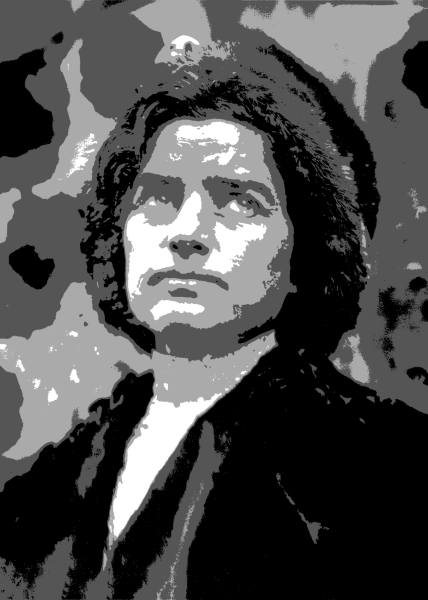
Catherine Ann “Kate” Barnard
Born in Oklahoma Territory in 1875, Catherine Ann “Kate” Barnard led a life of an educator, and later a businesswoman, writing legislation for statehood and grew to believe that women had great political potential, especially social justice reform.
Barnard entered politics in 1906 when Oklahoma statehood was imminent. At the Constitutional Convention, she convinced delegates to adopt reform measures prohibiting child labor and the establishment of the Office of Commissioner of Charities and Corrections. Shortly after, the Democratic Party endorsed her candidacy for that position. She went on to win the office with more votes than any other candidate in Oklahoma’s first general election. She was the first woman in America elected to state public office—more than a decade before women had the right to vote.
Barnard was a pioneering social reformer and politician known for her work in advancing the rights and welfare of vulnerable populations. Her tenure was marked by significant reforms while she advocated for improved conditions in asylums and prisons and worked to end child labor. She pushed for the advancement of Native American rights and welfare while consistently seeking to improve living conditions and educational opportunities for minorities. As commissioner, she persuaded the state legislature to adopt laws requiring compulsory education, regulating child labor, and launching a juvenile justice system.
“Human conservation is the first consideration of true statesmanship. So long as America has one starving child, our governors and statesman have a right to think of nothing else.”
In 1910 Barnard was reelected by a substantial margin, although later in her tenure she was marked by constant challenges. When she embraced an unpopular cause, the protection of Indian orphans’ property rights, it proved to mar her reputation.
In 1913 and 1914 the legislature engaged in a ferocious attack on the executive branch — Barnard provided a target for legislative critics, who slashed her department’s budget, thereby its size and effectiveness. Despite her achievements, she faced significant opposition and was eventually removed from office in 1918, partly due to political machinations and her outspoken nature.
After leaving public office, she continued her advocacy work and campaign for Native American property rights but with little success. Poor health and depression forced her into seclusion, and she died in Oklahoma City on February 23, 1930. She was buried in Oklahoma City in a grave that was not marked. Although she was one of the nation’s most effective social justice reformers as well as one of the most successful woman politicians, her reforms lost their influence after she died.
Barnard’s legacy remains significant in the history of social reform, and she is remembered for her dedication to justice and efforts to improve the lives of the marginalized. Today, a bronze statue of her is on display on the first floor of the Oklahoma State Capitol, and she was inducted in the Oklahoma Women’s Hall of Fame in 1982.
Alan Hart
Alan Hart is the first known transgender graduate of the University of Oregon Medical School, later renamed Oregon Health & Science University. He is one of the first trans men to undergo surgery as part of his transition process. Hart was born in Kansas in 1890 and moved to Oregon after the death of his father in 1892. After attending Albany College (now Lewis & Clark), Hart attended the University of Oregon Medical School, graduating in 1917.
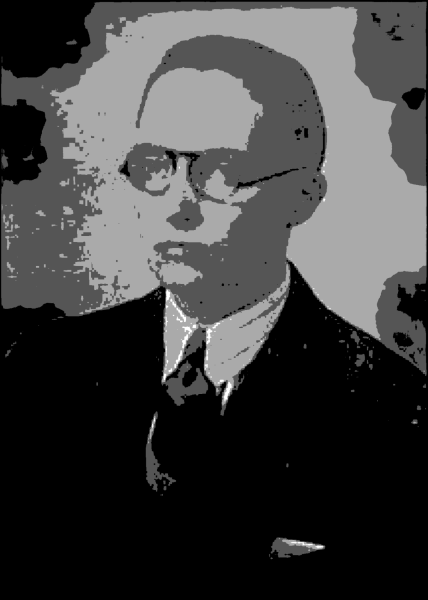 The following year, Hart had a hysterectomy, married his first wife, Inez Stark, and began medical practice in Gardiner, Oregon. He worked as a radiologist and had a special interest in tuberculosis. The couple had to relocate frequently after their secret was exposed and in 1923, Stark left him, and they divorced in 1925. Later Hart married his second wife, Edna Ruddick, the same year. They remained married until Hart’s death in 1962.
During Hart’s youth, he gravitated toward typically male activities and attire, grappled with his growing attraction to women and dealt with the abuse he suffered from his stepfather. Hart sought out a psychiatrist, J. Allan Gilbert, and they attempted to treat the “difficulty” with hypnosis and other “suggestive therapeutics,” to no avail. Hart then began to worry that a cure might remove him of his “masculine ambitions and tastes” and he began to look at other options. Sometime later, Hart decided on the course, and, as Gilbert writes,
“Hysterectomy was performed, his hair was cut, a complete male outfit was secured and having previously identified himself with the Red Cross, he made his exit as a female and started as a male with a new hold on life and ambitions worthy of his high degree of intellectuality.”
In addition to his medical career, Hart was also a best-selling author, and his works frequently exhibit autobiographical content. The title character of “Doctor Mallory” is a country doctor who fights against ignorance and prejudice, and makes an argument for socialized medicine. In “The Undaunted”, Hart hits even closer to home with gay physician “Sandy Farquhar” who pursues a career in radiology “because he thought it wouldn’t matter so much in a laboratory what a man’s personality was.”
“I am happier since I made this change than I ever have in my life, and I will continue this way as long as I live[…] I have never concealed anything regarding my [change] to men’s clothing[…] I came home to show my friends that I am ashamed of nothing.”
– Alan L. Hart
“From a sociological and psychological standpoint, she is a man. If society will but let her alone, she will fill her niche in the world and leave it better for her bravery.”
— Dr. J Allen Gilbert
When Hart died in 1962, his will instructed his attorney to destroy his personal papers, photographs and records. Researchers rediscovered his story in the 1970s, but it remains largely unknown.
Sojourner Truth
Isabella Baumfree, later known as Sojourner Truth, was a major figure for abolitionists and women’s rights activists. Baumfree was born circa 1797, lacking any recorded birthdate as is common with enslaved peoples. A Dutch Patroon in Swartekill, NY within Ulster County owned her and her family, but in 1827, she escaped. Baumfree had five children leading up to her escape, of them she managed to leave with one daughter.
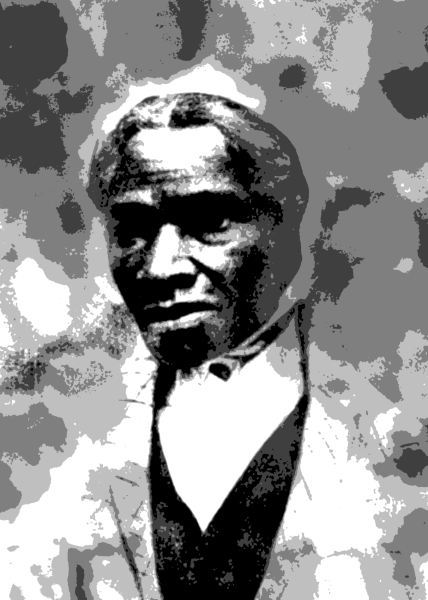
In 1829, she moved to New York City, NY, served households, and around the same time embraced the evangelical religion, taking on a career as a street corner preacher. During this time, she told stories and sang songs to spread messages of abolition and women’s rights, by 1843 took on the name Sojourner Truth. She also wrote a narrative about her life, which provided a small income for her to live on.
Truth is well known for giving speeches about slavery and rights. Her most famous speech is “Ain’t I a Woman?”. She toured Ohio until 1853, speaking about the abolitionist movement and women’s rights, as well as challenging abolitionists for not speaking out for equality of black men and women.
“I am a woman’s rights. I have as much muscle as any man and can do as much work as any man. I have plowed and reaped and husked and chopped and mowed, and can any man do more than that?”
Truth was summoned to Washington D.C in 1864 and was asked to assist with the National Freedman’s Relief Association and at one point; she had met with President Abraham Lincoln. During the Civil War, she assisted with obtaining and distributing food and clothing to black soldiers and advocated for black soldier regiments. In 1865, she attempted to sway Congress to provide land grants for former slaves, but unfortunately, she never convinced them.
Truth passed away in 1883 and was buried in Battle Creek Hill Cemetery in the state of Michigan. She dedicated her life to abolitionism and women’s rights.