Experience an exhilarating journey through the geological wonders of the Colorado Plateau and the Basin and Range. This course offers students a unique opportunity to experience the intricate layers of the Earth’s history while traversing breathtaking landscapes. These field excursions have been curated and led by geology
Professor Tom Bush since 1996 and consist of three variations that tour the various outcroppings, state and national parks of south-central Utah, each one offering a different view of geological formations.
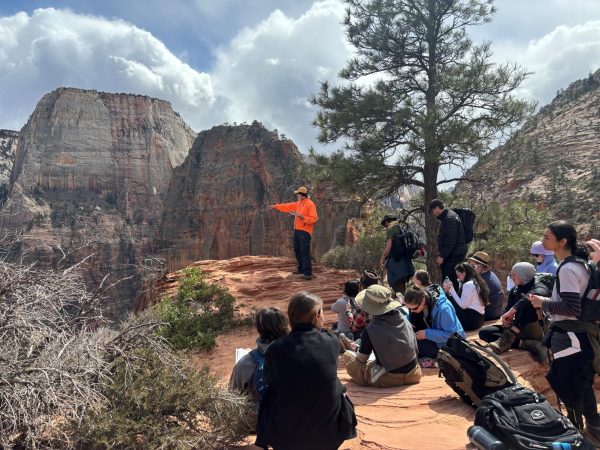
The 2024 field excursion featured treks to the towering cliffs of Zion National Park, other-worldly hoodoo’s of Bryce Canyon National Park, and spectacular sunrises at base camp, located in Coral Pink Sand Dunes State Park.
Zion’s West Rim Trail takes you to Angel’s Landing through steep grades, slippery ledges and sharp drop-offs. This strenuous trail is 5.4 miles roundtrip, gains 1,488 feet of elevation and takes the average hiker two to four hours to complete.
Whether finding ancient fossils embedded in limestone or examining the beautiful formation layers, every hike is a lesson in the dynamic forces that represent 150 million years of Mesozoic-aged sedimentation, and every destination presents a rich tableau of geological phenomena waiting to be explored.
Through hands-on fieldwork, students gain firsthand experience in rock identification, geological mapping and the interpretation of ancient landforms. By the end of the course, participants not only acquire a comprehensive understanding of geological principles but also cultivate a profound connection to the awe-inspiring landscapes that define southern Utah. Geology 115 offers an unforgettable educational adventure that inspires a lifelong passion for geology and environmental stewardship.
Experience an exhilarating journey through the geological wonders of the Colorado Plateau and the Basin and Range. This course offers students a unique opportunity to experience the intricate layers of the Earth’s history while traversing breathtaking landscapes.
These field excursions have been curated and led by geology Professor Tom Bush since 1996 and consist of three variations that tour the various outcroppings, state and national parks of south-central Utah, each one offering a different view of geological formations.
The 2024 field excursion featured treks to the towering cliffs of Zion National Park, other-worldly hoodoos of Bryce Canyon National Park, and spectacular sunrises at base camp, located in Coral Pink Sand Dunes State Park.
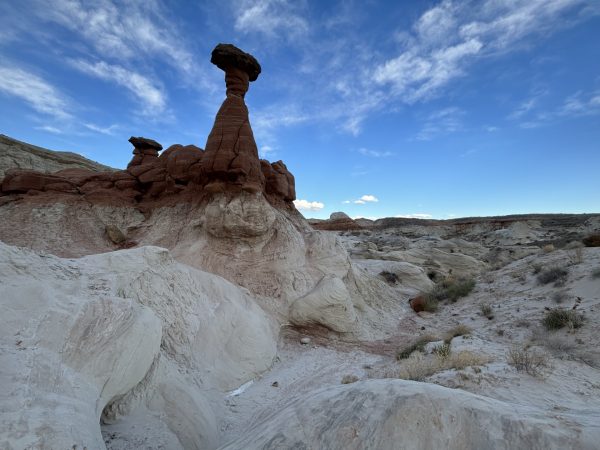
Zion’s West Rim Trail (top left) takes you to Angel’s Landing through steep grades, slippery ledges and sharp drop-offs. This strenuous trail is 5.4 miles roundtrip, gains 1,488 feet of elevation and takes the average hiker two to four hours to complete.
Whether finding ancient fossils imbedded in limestone or examining the beautiful formation layers, every hike is a lesson in the dynamic forces that represent 150 million years of Mesozoic-aged sedimentation.
Through hands-on fieldwork, students gain firsthand experience in rock identification, geological mapping and the interpretation of ancient landforms.
By the end of the course, participants not only acquire a comprehensive understanding of geological principles but also cultivate a profound connection to the awe-inspiring landscapes that define southern Utah.
Geology 115 offers an unforgettable educational adventure that inspires a lifelong passion for geology and environmental stewardship.
Did You Know?
Cryptobiotic soil crusts are a crucial element to the arid ecosystems found in Utah. These crusts are made up of cyanobacteria, lichens, mosses and other microorganisms. Together they form a delicate, living crust on the soil surface. This crust plays an important role in preventing erosion, retaining moisture and contributing to the overall health of desert environments. Areas are often marked to educate hikers about the importance of these fragile communities. Walking on the crusts destroys their structure and takes 50 years to recover, making the area vulnerable to erosion and invasive species. While hiking and rockhounding it’s important to beware of footfalls — even if the area is not marked. Tread lightly!