Cameron Cyprain Staff Writer
Nestled in the heart of the Olympic building is the art department, easily distinguished by the Fine Arts Gallery adjacent to the music hall. Art Professor and gallery coordinator David Roholt holds one of his painting classes down the hall, in room O270.
A visit to this somewhat hidden workspace reveals the color-rich aftermath of various ongoing projects. The artistic environment is quite liberal: students have the freedom to interpret their own images from a number still life sets. This means that what they paint does not have to mimic the perceived image in terms of color or strict form, but is instead a rendition of the image they see.
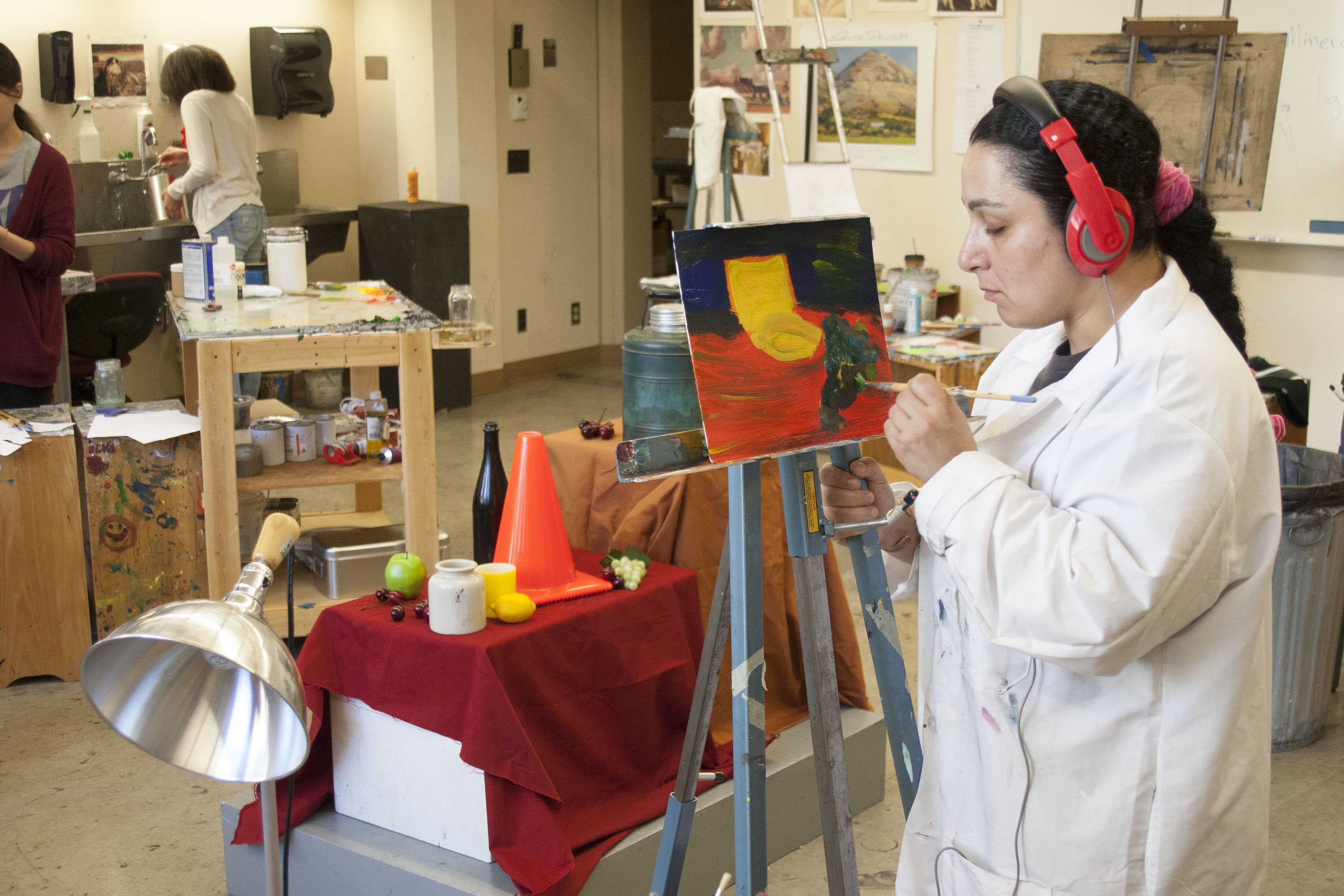
As part of a recent class assignment, students had the task of completing their paintings within the parameters set by a few different methods and styles. There was also a time limit of no more than 20 minutes. First, they used a method known as Imprimatura, an Italian word meaning “first paint layer” or “toned ground.
In this process, an initial layer of stain is applied to the canvas as a form of underpainting. Using Imprimatura allows the artist to establish a relational difference between dark and light in their painting.
Each piece by the students was a work in progress and was therefore untitled. However, styles, not provocative titles, were the primary focus
“I like surrealism, especially epic surrealism,” said Yasi, who is a veteran. One of Yasi’s toned ground paintings depicted a bright-green-eyed figure with bronze-skin and golden hair. Its sharp, detailed expression evoked a subtle sense of loss and sadness, with eyes that wonder. Two other students, Jae Spovacek and Joe Marra, unveiled their works, each making an imaginative use of color and shape.
The second style used was Alla prima, Italian for “at first attempt.” Though self-explanatory, this method is unique in that it relies on a continuous sequence of layering, and the work must be finished before the first layers of paint dry. “They’re timed on it as well,” said Roholt, “with the last method, they were messing with shadows. This time they must go without using lines.”
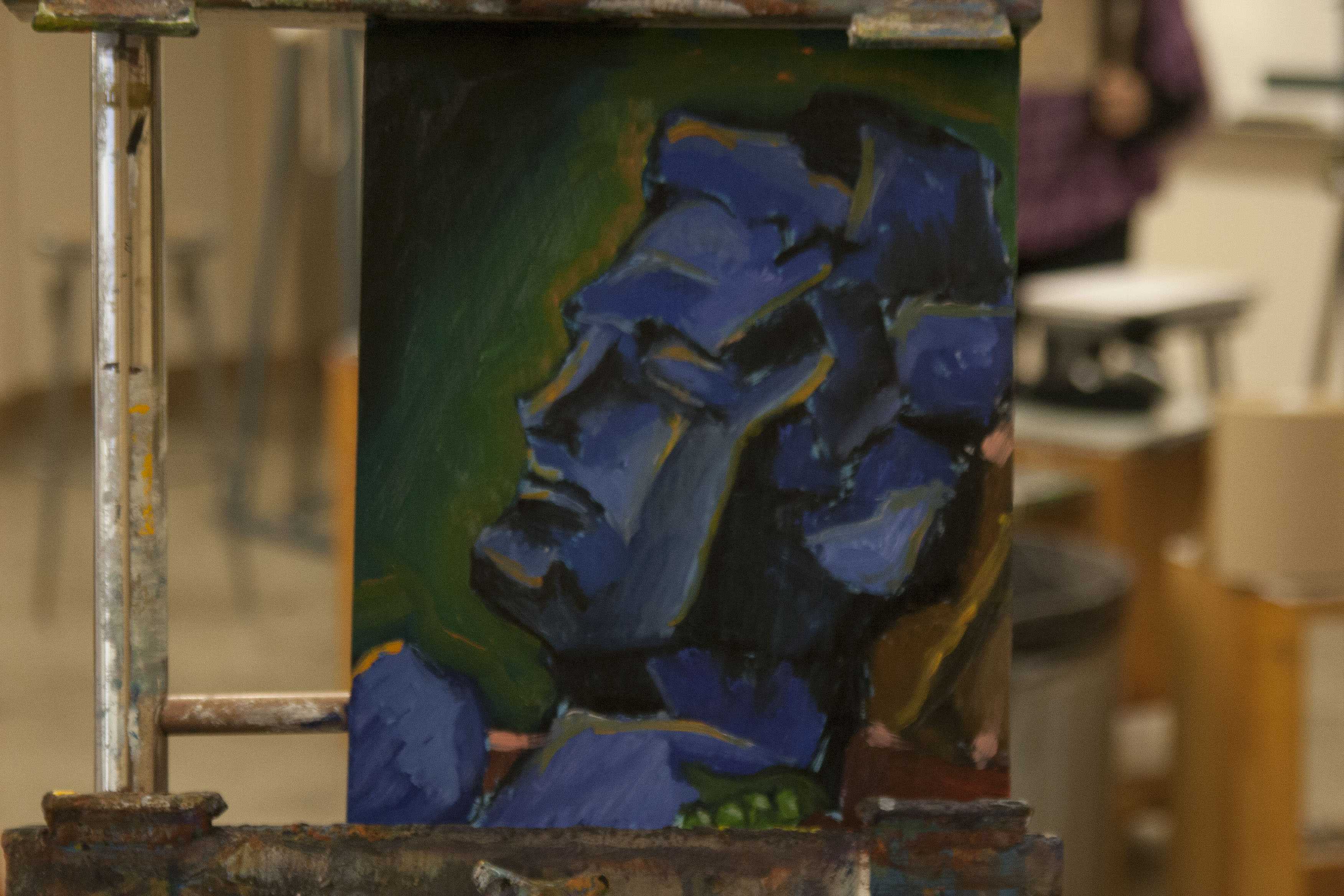
Periodically cycled and posted, completed student projects often reside on walls across the hall from the classrooms. Passersby can view these in addition to featured artistic works displayed in the separately organized Fine Arts Gallery, perhaps to serve as a motivator for potential master painters, drafters, printmakers, and sculptors found right here on campus.