‘Middle-Earth: Shadow of Mordor’ review
Middle Earth finally finds a game worthy of the legendary source material
July 7, 2026
“One ring to rule them all,
One ring to bind them,
One ring to bring them all,
And in the darkness bind them,
In the land of Mordor,
Where the shadows lie.”
When I was just a kid, there was a fantasy I would live out. The tree branch I had carefully picked would become Anduril, the Flame of the West, with which I smote the Balrog upon the mountainside.
I praised death as I charged in the last ride of the Rohirrim against the assembled armies of darkness. The movies and books depicting Middle Earth had lit a fire in my gut and my soul, and as much as I loved the many imitators, there was nothing that could quite match the magic of J.R.R Tolkien’s lore. I wanted more.
While there have been plenty of games set on Middle Earth, there has been few that have been memorable. Sales were never huge and none had the ability or courage to do more than retread the movies or books. “War in the North” attempted to do something original, but failed to excite gamers. With the release of “Middle Earth: Shadow of Mordor”, we finally have an addition to the universe worth exploring.
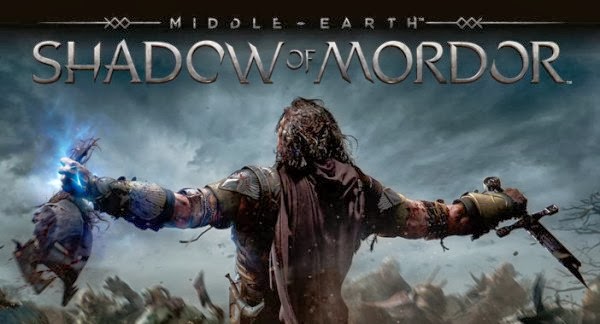
From the second that I started exploring Mordor, I knew this game was different than its predecessors. The player character, Talion, is a ranger of Gondor stationed on the Black Gate of Mordor, guarding against the return of the Dark Lord.
In an excellently paced opening, we see that his wife wishes for a better place to live, that his son naively rushes towards enlistment. Talion is both sworn to duty and trapped by it, unable to leave because of past crimes, but he promises his family that one day they will find a better life. It’s one promise he will never keep as the Dark Lord returns and takes the lives of them all.
Unfortunately, death is another blessing he is denied, as he is possessed by an ancient elven wraith that is only certain of the vengeance he craves. In order to see his family again, Talion must kill the Black Hand, the first Lieutenant of Sauron and break the spell of the blood sacrifice he was a part of. It might be the most metal game to come out since Brutal Legend.
The game itself plays like a combination of “Assassin’s Creed” and “Batman: Arkham City,” with Talion exploring the huge playable area of Mordor, here separated into two distinct areas, and picking off the Uruk captains. The gameplay is a lot like Assassin’s Creed, but is more fun in nearly every respect. Combat is visceral and fun, with a variety of fluid slashes, executions, powers and abilities that offer a lot of options in any encounter. The spectral bow has a useful but limited pool of “focus” that slows down time so that precision can be maintained even in the middle of a massive melee.
The captains are randomly generated by the game, guaranteeing an endless supply of targets that stay fairly fresh. Each captain has different strengths and weaknesses, forcing Talion learn about and use different weapons and strategies to kill them.
One captain was afraid of caragors: giant, scaly panther creatures that you can learn to ride. I freed a half-dozen of the beasts from their cages and rode in amongst my newly adopted pack. The captain turned tail and ran, but not fast enough, and the experience left me grinning for hours.
When captains or orcs do manage to kill Talion, they get a promotion and become his nemesis. Captains can even return from mortal injuries to hunt you down, accruing more and more scars in the process.
Later in the game, Talion is able to brand Uruks with his wraith powers, which puts the orc under his control. It’s possible to brainwash captains and order them to attack other captains, or force bodyguards to betray the war-chiefs they serve. It’s a fun dynamic, but could use some polishing. I once got spotted in a fortress, and the captain I had put a lot of effort into capturing jumped to my defense and promptly died. I would rather have just escaped by myself than lose such a valuable resource.
Besides messing with the orc army, there are also a good number of story missions with a likeable cast of characters. From old favorites like Gollum, who calls the wraith the “Bright Master”, to new faces like Torvin the gruff dwarf hunter who teaches Talion to ride the massive trolls that wander Mordor.
The writing is surprisingly good, and has a nice balance of respect towards the canon universe and coming up with new material. The story feels authentic, but not redundant, and the missions usually come with new abilities. As the story develops, there are revelations about the history of Sauron and the rings that, as a huge Tolkien fan, were really exciting to me, without being too obscure or complicated for newcomers.
The player can also search out artifacts that hold memories of the history of Mordor. In all cases, they inform the player about the characters in the story and the land of shadow, and I personally really enjoyed the comments Talion and the Wraith provided.
There are also weapon challenges spread throughout the map, described as “forging the legends” of your weapons. They are varied enough to not be too repetitive, but the stealth missions can be frustrating. I wish some of the set-pieces, such as detonating explosive traps to kill orcs, or fighting gladiator-style in an arena, were more incorporated into the story. I would also like to see challenge maps be part of a separate menu so that they don’t disappear when you first complete them.
This game was surprisingly refreshing. Many aspects, such as the gameplay, the soundtrack and the art design were so consistently solid I actually felt surprised. My standards felt so lowered from games, like Destiny, that are compromised in some way that I was just waiting for Shadow of Mordor to fail, but it didn’t.
Shadow of Mordor is the Lord of the Rings game I’ve wanted since I was a little kid running around waving sticks. It is stylish, slick, fun, and holds an immense respect for the source material. This is a must-have game for gaming fans of J.R.R Tolkien’s universe, and for fans of the “Assassin’s Creed” games who feel the formula was lacking. I look forward to seeing where the series goes next.