
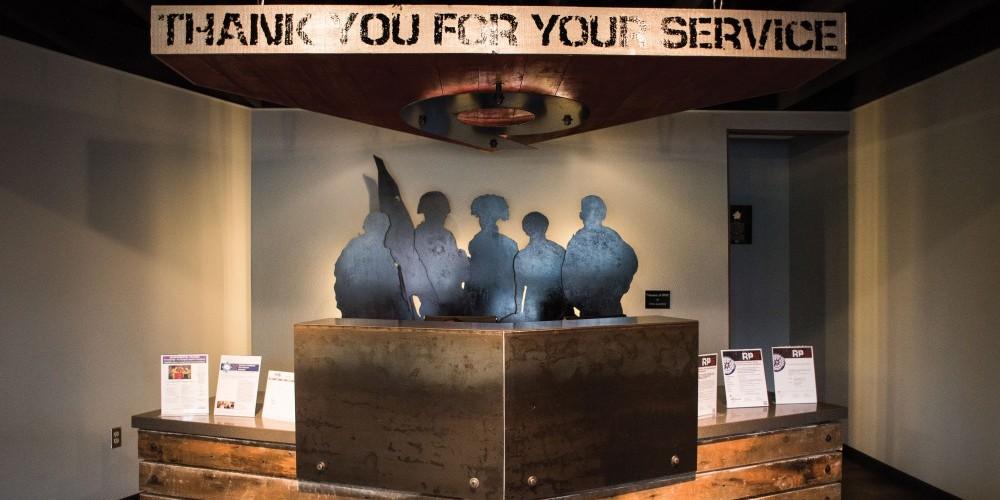
RallyPoint 6 guides vets through transition
The program helps pick up where the military fails to help troops after leaving service.
July 7, 2026
Transitioning out of the military can be hard on both the service member and the family. RallyPoint 6 (RP/6) helps ease that transition. RP/6 helps build a bridge between the military and civilian life. In the past year, over 2500 individuals have been helped by RP/6.
RP/6 was started by two veterans who wanted to help other veterans by making sure they have what they need to succeed. Founder and CEO, Anne Sprute, and Founder and Director, RJ Naugle lead a team of organized individuals to reach out to the community, businesses, and schools to gather up the resources and help needed for the veterans. Other members of the Board of Directors include Lakewood Mayor Don Anderson, former Lakewood Mayor Doug Richardson, and Pierce College President Denise Yochum.
The program is set up on the concept of 8 basic pillars; employment, education, housing, finance/legal, family support, VA benefits, volunteerism, and health/wellness. When a veteran goes to the RP/6 website or in person to the Lakewood office, they start a questionnaire to help direct them to the proper Scout which is like a case manager.
“The ones that we see the most, that occur the highest, are employment, education, and disability/compensation,” said US Marine Corps Veteran Tony Belot, RP/6 Director of Programs.
Together the Scout and the client will form a plan for the member to work towards. In each situation, the member will be given a ‘warm handoff’ which basically means the Scout will call up the school or other agencies and tell them that the veteran will be showing up at what time and what their game plan is.
The education program is connected to over 20 different colleges from around the area. An education guru, who works for RP/6, knows about each college programs, which helps the veteran understand what they need to succeed in college.
“Each college contributes to the pay of the education guru,” said Yochum “They represent all colleges. That way we can be insured that the service is focused on the individual and not just one college.”
If a veteran wants to give back to the program, RP/6 has made it simple to volunteer. Three ways someone can volunteer is working around RP/6 locations, at community engagement events, and community service projects.
“Volunteerism is a great way to fill the gaps in resumes while you are in school,” said Belot.
RP/6 is expanding to places around the nation. Working with the USO, United Services, RP/6 Transitions Centers are opening up near or on bases, but with funding from the USO. This allows veterans gain access to more resources closer to them if they are not close to Washington State. Currently the transition centers can be found in Colorado Springs, Fort Campbell, Fort Hood, San Antonio, and Norfolk.
A fellowship program allows veterans to work for RP/6 for a ‘tour of duty’ which goes for 6 months. This helps the veteran build up their resume, skills, and help understand the civilian workforce better. The fellowship program is a paid program that helps supplement their income.
“We want more student veterans to know about the Fellowship program,” said Belot. “It is a great way to give back and help other veterans.”
To keep up with the ever evolving times of social media, RP/6 has a Digital Media team that consists of fellows that operate it. This gives a vital connection for users to pass along information to those who need it the most.
“They can follow us on RallyPoint 6 on Facebook,” said Kevin Henry, Digital Media Fellow. “We post jobs and other resources on there, along with our website, for veterans to apply too. We even have a Linkedin user group.”