Journalists have been providing information and telling stories for centuries, often adapting to society’s changing needs. One goal for journalists has always been spreading reliable news across communities and generations.
Even though messages aren’t carried on horseback any longer, getting reliable and trusted information to people has become increasingly challenging.
While media expansion is often a good thing, allowing us to advance as a society, it also can hinder the transportation of truthful, fact-based information. However, this challenge is further compounded by the lack of diversity in the news field.
Get Up Stand Up
The 1970s was a decade of flower power, scandal and radical change. Despite the social shifts, journalism remained at a standstill. In 1971, only 22 percent of newspaper journalists and 11 percent of television journalists were women according to Christy C. Bulkeley from Nieman Reports. Though the average American newsrooms began diversifying their staff in the 1970s and 1980s, a 2023 Pew Research Center study shows that more than 76 percent of reporting journalists who were surveyed were white. Journalism remains to be a white male dominated workforce with only small increments of improvement over a long period of time.
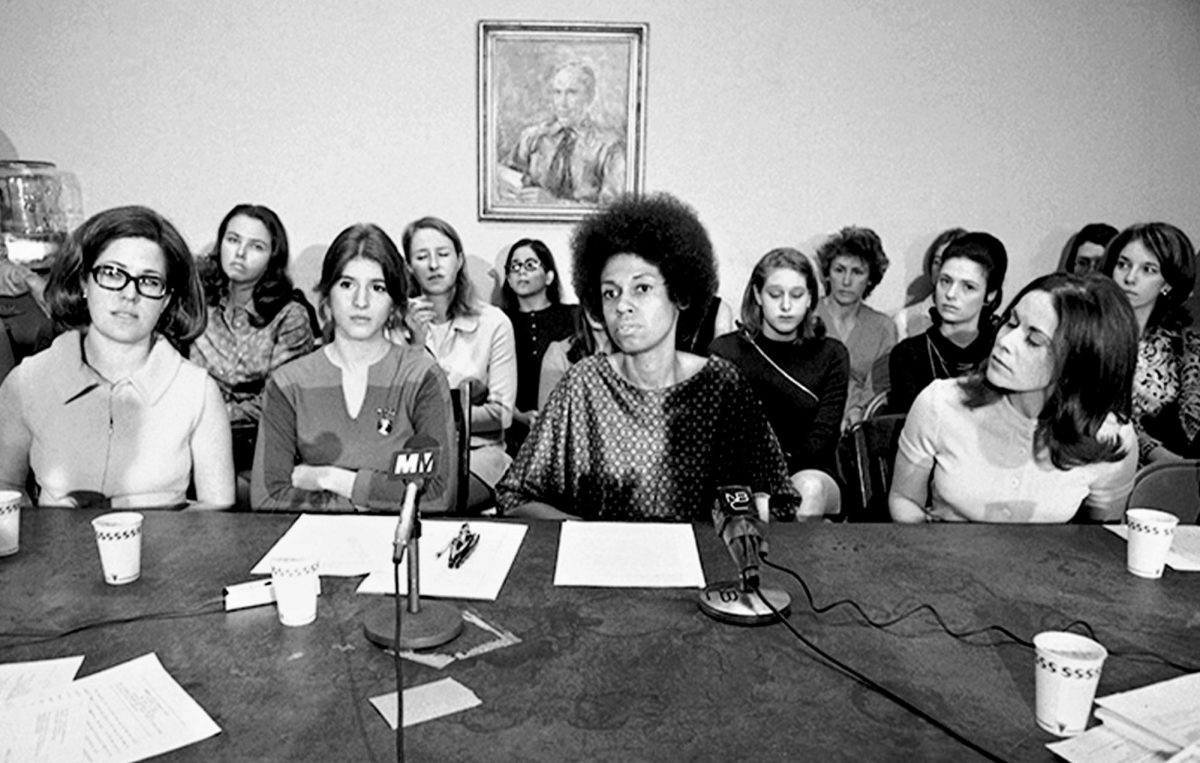
Amid the ongoing disparities, activists in the 70s organized a sit–in protest on March 18, 1970, at the Ladies’ Home Journal offices to demand a change in the female propaganda of women’s magazines. More than 100 women and feminists marched into the offices to protest the depictions and advice given on female interests by the magazine’s predominantly male writers
School’s Out
Student journalism has long been an ongoing and invaluable source of education for many students throughout their high school and college education, offering a hands-on approach to learning writing skills, editing and photography. Student journalism has been practiced since the late 19th century. Nevertheless, many aspects of student journalism hindered its full potential in the 1970s.
Jack Nelson, a Pulitzer Prize winning journalist and a reporter on the Watergate Scandal in 1972 and the civil rights movement from 1954 to 1968, wrote about the woeful state of student journalism. His book, Captive Voices, published in 1974, found that student censorship was rampant and students needed stronger protections for their First Amendment rights. From this discovery, the Student Press Law Center was created.
The SPLC gained widespread attention in 1977 after students in the Fairfax County School District asked for help. The students published an article about contraception education that had been censored by their school. The school principal argued that because the school district did not allow sex education, the student should not be allowed to write about it in the school paper. School officials insisted that the newspaper was essentially a branch of the school, not a public forum. With the help of the SPLC, the students took their school to court, and it was ruled that this was considered censorship and a violation of First Amendment rights.
The courts ruled “The existence of state involvement in providing funding and facilities for [the newspaper] does not determine whether First Amendment rights are applicable…”
The success of the Fairfax County case allowed for the SPLC to officially become a nonprofit organization. They have still remained an active part in ensuring student journalists are protected.
Young Hearts Run Free
In 1974, Fort Steilacoom Community College (now Pierce College Fort Steilacoom) launched its student- run newspaper, The Pioneer. By May 23rd, 1975, the newspaper had published eight issues with the help of their staff of 24 students and one advisor. The Pioneer was published bi-weekly excluding exam weeks and winter and spring breaks. As part of Student Programs, the paper was funded by student fees and was freely distributed across campus to students, staff and faculty.
Around the same time The Pioneer made its debut at Fort Steilacoom community college, another college student began his own adventure in higher education.
Kevin Shearer was 18 when he began attending Centralia Community College in 1974. With a basketball scholarship in hand, he was ready to set off on the journey of working on his general education requirements before eventually settling into a four-year university. However, Shearer quickly realized that the cost wasn’t worth continuing at the school.
“In those days, tuition was $84 a quarter. You do the math and it’s about $250 for a years’ worth of tuition. And the basketball scholarship paid for it. But rent down there was like $200 a month, so I pretty quickly realized I’m going backwards financially.” Shearer said during an interview conducted on March 26th, 2025.
Shearer decided to instead transfer to Fort Steilacoom Community College where he would continue his education. He began school in early October, late into the fall quarter. With help from the basketball coach, Shearer was able to enroll in a few classes that remained available.
“I’d always been good at writing, and I was pretty good in English… I had gotten some classes, but to fill in the last parts, there was an opening on the newspaper,” he said.
Shearer became a sportswriter for the newspaper with his love for basketball. While not initially intending to take the journalism class, he found a love for it.
“It was, I guess, a talent that came pretty easy for me to write in a way that I thought was interesting for a newspaper… It was a marriage between what I thought I was good at and the availability of a sportswriter,” he said.
During the 1974 to 1975 school year, their writing process was different than what the Pinnacle experiences today. Shearer shared that the writing and production process was maintained in a silo format. He explained,
“I would come in and get my assignments. So, they would probably be handwritten in a mailbox.”
Shearer explained that after attending a basketball game, he would write the article and leave it inside a physical inbox that he had in the newsroom.
“I quickly learned [to] do it when it’s fresh because you know, memories fade fast and the details are important.,” he explained.
After that, he wouldn’t see his article again until it was published. He voiced that he wished there was more collaboration in the creation of the Pioneer, but at the end of the day it was efficient.
Shearer had a lot to say on the polarization of politics and social media in 2025. “…[It] seemed to me in the 70s there was more… polarization of either ‘it was this way’ or ‘that way.’ Whereas today, I think with the availability of types of media you can really open up debate more.”
Shearer believes that the increase in the different kinds of media that is being received by readers, and the growing increase of younger generations in the workforce is an improvement that needs to continue. The expansion of media has been vital to the evolution of journalism.
“I think media has expanded with online capabilities so that people can feed back into a topic that you couldn’t get before, and it’s so enriching”
During the 70s, the nation was deeply divided between those who supported the war in Vietnam and the antiwar movement. Today, Shearer thinks that there seems to be a more widely accepted middle ground, where people feel more welcome to have thoughts and emotions that fall between grey areas. However, he pointed out that despite this progress, he feels we experience bigotry and bias at an increased rate. In light of this, the need for clear communication becomes even more evident.
“The ability to write and communicate and express ideas and reflect and get them across is universal,” he remarked.
After leaving Fort Steilacoom Community College, Shearer attended Washington State University. Over the course of his life, Shearer thought about pursuing many careers, including teaching and being a principal before he eventually realized he wanted to work in the brand-new field of computer science.
Shearer noted, “You couldn’t even get a degree in Computer Science in the 60s. It didn’t exist.”
Shearer said that because the computer science degree was relatively new, there wasn’t as much stigma over who the degree was designed for. The introduction of technology into the average workspace created a chance for more opportunities for people from diverse backgrounds.
“Really fast I saw the evolution of inclusion,” he said.
Shearer settled into a job at Weyerhaeuser Company. He worked at the company until he earned the title of Chief Technology Officer and retired at the age of 55. He accredits many skills learned during his time with The Pioneer as a helpful tool in his successful career.
If Not for You
In 1986, Fort Steilacoom Community College outgrew its home in Lakewood and was ready to expand. The college changed its name to what we now know it as today, The Pierce College District. In 1990, the college marked the beginning of a new chapter and opened a permanent location in Puyallup to house its ever-growing student body.
When the college split into two locations, Student Media followed suit. The department opened a second newspaper called The Post. Students at the two newspapers continued to write for years until one day Pierce College Student Media came to a halt.
The reason for ending Student Media can be very vague but it is often attributed to the advisor at the time resigning, but it left students without a platform of expression. However, the passion for student media didn’t fade. In the fall of 2023, a new version of student media was launched with a new approach to the classic newspaper. A group of nine students worked hard to relaunch the newspaper to allow all students a chance to have their voice heard. The students decided to rename the magazine The Pinnacle.
The Student Media Team did their best with adjusting to the changes of a new department, but that wasn’t without its challenges. When another round of Student Media members joined the team in the fall of 2024, many of the students attended a conference where they learned about the Washington State New Voices Law. The law allows students to print whatever they feel is newsworthy as long as they follow The Code of Ethics in Journalism. The law also protects Student Media advisors from being reprimanded for what a student publishes.
It was realized that many students were being censored within their very own program, and they were being held back from sharing their true voice. The Pinnacle Editor-in-Chief at the Puyallup campus, Treva Adkins, jumped into action to figure out the best way to protect the voices of her team. Adkins contacted the Student Press Law Center as well as the Dean of Student Engagement and the Directors of Student Life and Engagement at the two respective campuses.
Working alongside various members of the college faculty, the Student Media team fought for their right to an unrestricted voice. It is not an understatement when it is said that the students revamped the entirety of the program, all well still preparing to publish the third issue of The Pinnacle and receiving additional time-consuming administrative tasks. The students rewrote the Student Media code of ethics, the constitution, the publication code and the Student Media job positions.
The students stayed unwavering in their beliefs of free student press and pushed to have their new Publication code ratified in December of 2024. Ratifying the code allowed Student Media to follow a legal journalism system that operates without censorship or sanitization. for the first time in almost five years.
The Revolution Will Not be Televised
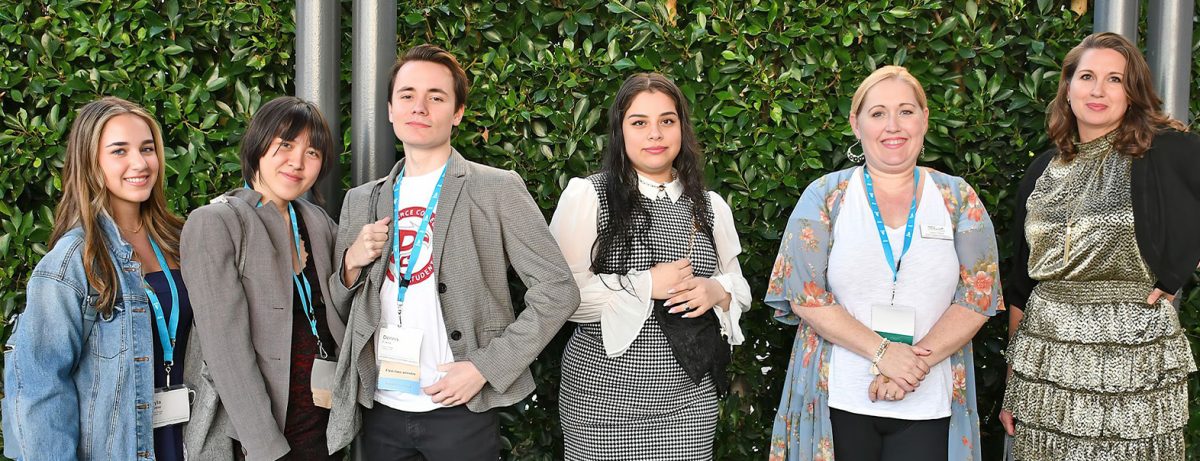
Despite the challenges faced by Student Media throughout its history, the various relaunches of the program represent more than a change of policy. It represents the ongoing fight for the freedom of expression and the importance of inclusive spaces for diverse voices. The current team at The Pinnacle represents the broadening demographic of student voices.
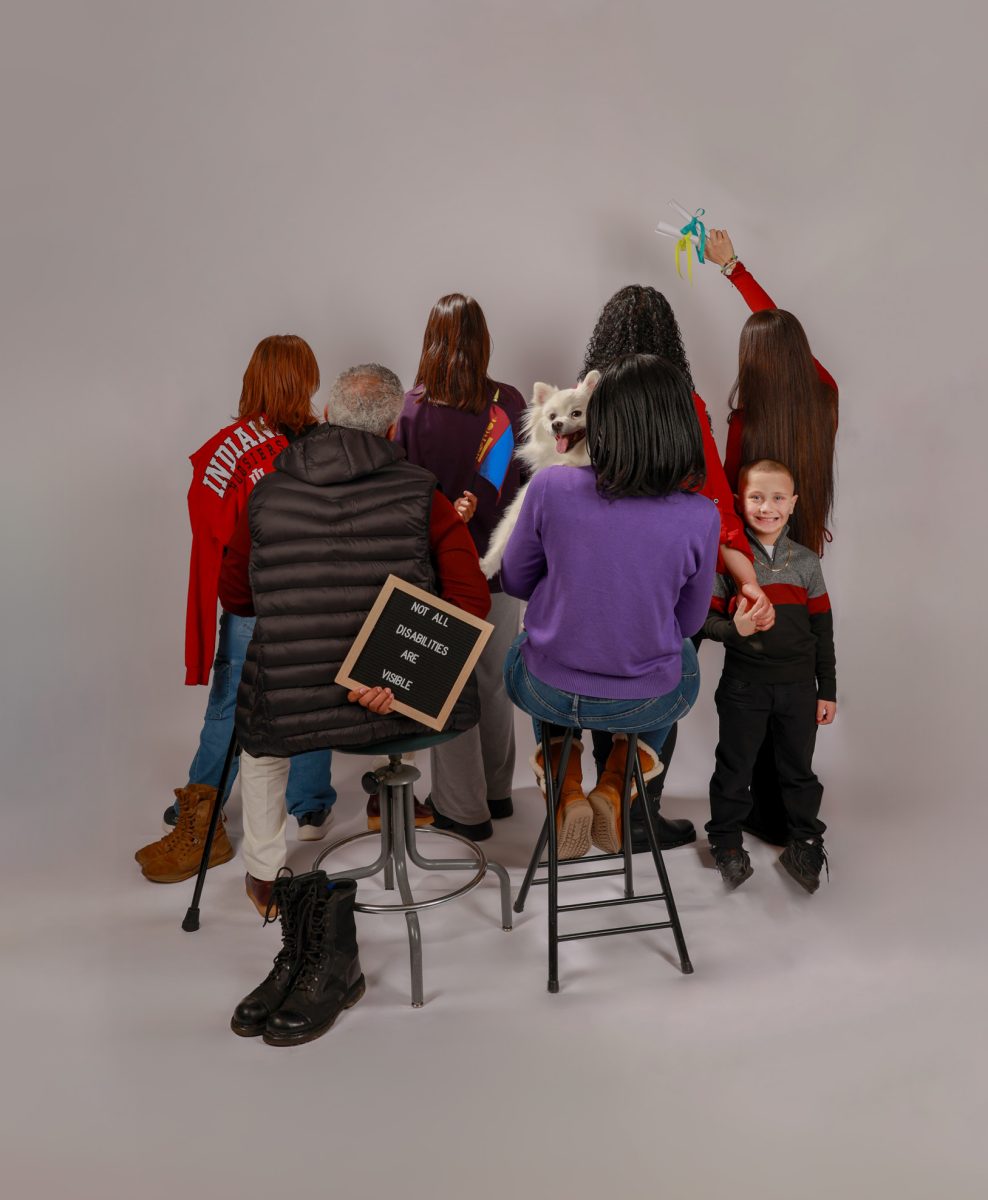
Only 20% of the student media team members describe their ethnicity as white or Eastern European. Additionally, half of the Student Media team identifies as part of the LGBTQIA+ community with the same percentage also identifying as neurodivergent. The team also stays female- dominant with about 70% of its members. The Student Media team also has a large amount of diversity within the ages of each team member. The youngest Student Media member is 17 with the oldest being 46.
It’s clear that diversity of the newsroom plays a vital role in creating a publication that fully represents more than just a single point of view but the whole of the student body. The Student Media team is not only creating a pretty magazine with interesting stories and passion projects; they are ensuring the next generation of students and journalists will have freedom and an open platform to shape media that embraces all voices.
Through commitment and devotion, The Pinnacle is becoming more than just a student paper: it’s a reflection of the future of journalism. A future where inclusion, representation and diverse perspectives are fought for and maintained.