
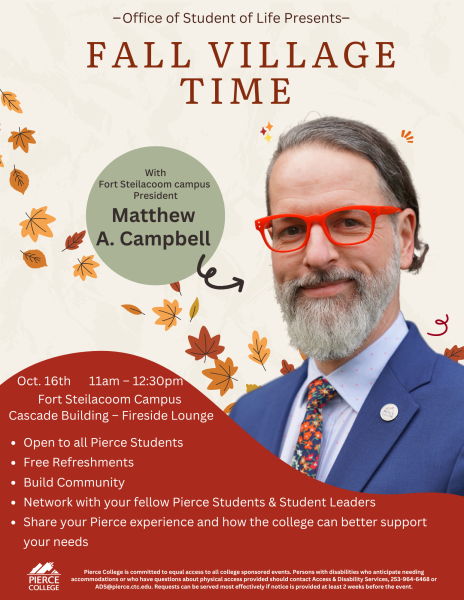
Fort Steilacoom campus students gathered on Oct. 16 at the fall Village Time to learn about what’s happening on campus, share feedback, and build connections.
In the event moderated by the Office of Student Life Director Joey Adams, campus President Matt Campbell delivered updates and plans for campus programs and resources.
Among the topics discussed at the event, multiple students expressed their concern about the high cost of textbooks.
Student Nelly Gonzalez said students in specific programs are required to buy expensive physical textbooks. She mentioned she pays $300-$500 each quarter along with tuition rates as an international student, which has been challenging.
In response, Campbell explained a project college officials are currently working on. The whole idea is to reduce costs for students by rolling a textbook fee into the tuition cost.
While the goal is to lower costs for students who have been hit with those high textbook bills, Campbell did point out one tricky part: this new fee might mean a higher cost for students who previously took classes that didn’t require buying any books.
Student leaders Anissa Pagliuso and Believe Biduaya both said it was difficult to navigate the tuition payment system and suggested hiring a financial aid navigator to be added to the student advising system.
Gonzalez agreed to the prospect of building a stronger financial support arrangement.
In light of this idea, Campbell briefly remarked on the hope to establish a financial advisor role for students, as someone who can guide them through this crucial part of the college experience.
Further information regarding this project is to be shared after extended discussions among the relevant departments.
In remarks to the current climate, the audience members also conversed about what the college can provide to support the diverse student groups across campus, especially the international and immigrant student groups.
Discussion points included considering students’ intersectionality and identifying issues that stem from their multiple layers. This discussion covered primarily recognizing the needs of first-generation students who may lack experience navigating through a college setting, and the possibilities to establish a system in assisting them through the beginning process.
Students’ conversation touched upon the practicability of more relevant workshops on campus to offer insights and raise awareness in regard to the cultural and civic understanding of the environment. In addition, ways to encourage further community engagement by integrating student well-ness programs that are hobby oriented.