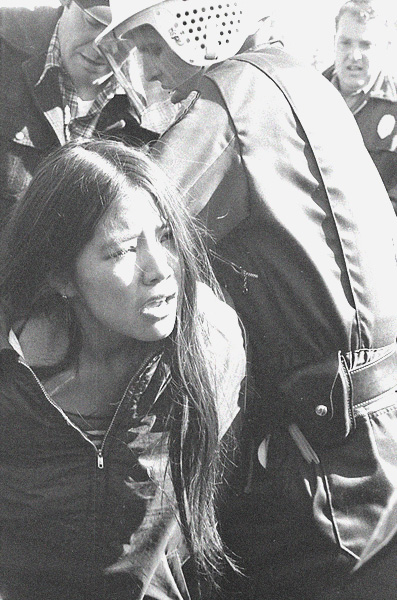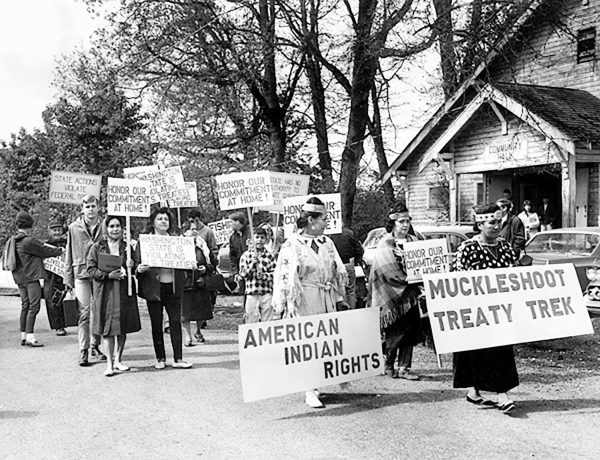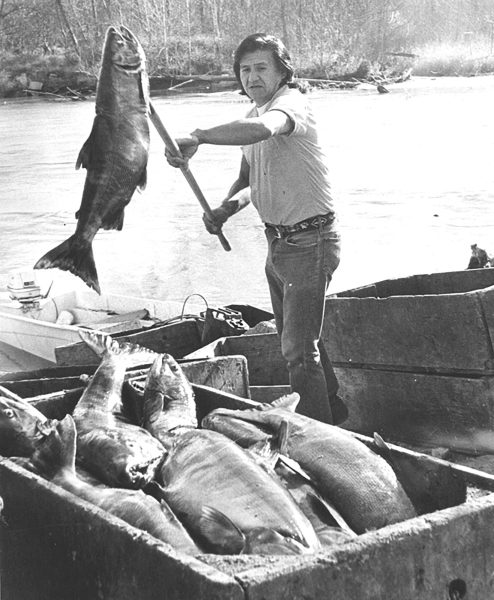
Billy Frank Jr. from the Nisqually Tribe and other Native community members fished the Nisqually River in 1973 in an act of civil disobedience.
While their fishing was legal according to the treaties signed with the U.S., it was illegal according to Washington state law.
Washington state officials had criminalized off-reservation fishing and arrested dozens of tribal fishers, including Frank.
Pacific Northwest Tribes
A Brief Disclaimer
I am not Native American. My goal in this story is to explain the importance of canoes and culinary arts to local tribal members.
In the long journey to understanding and acceptance, it’s required that we work together to find shared connections. Acceptance is something we all have to work for. “The Pinnacle” is the platform to help facilitate education within our community.
With this belief of working toward acceptance, Martha Sherman and Aryanna Sherman shared their experiences. Both are advocates for their community and work with local K-12 schools to help Indigenous children find cultural enrichment and success.
Our conversation explored two cultural traditions in Pacific Northwest Indigenous people. The first topic was the Inter-Tribal Canoe Journey.
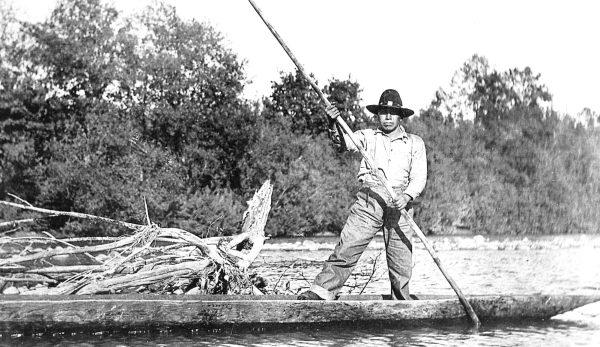
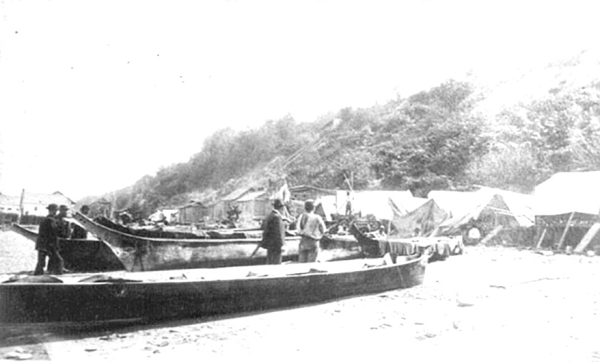
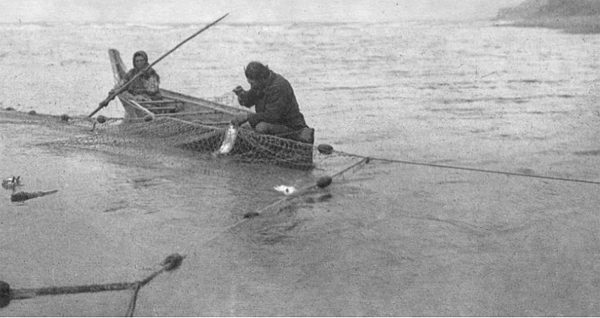
Canoe Journey
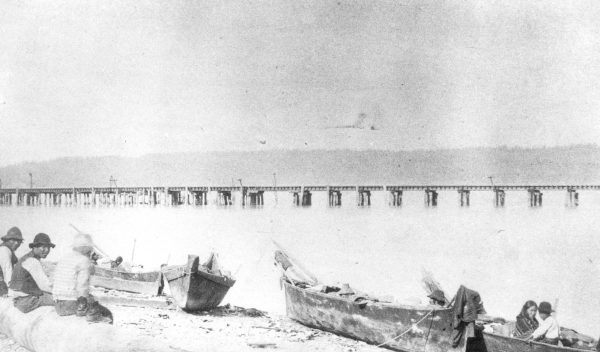
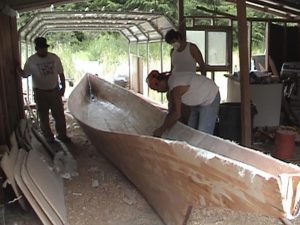
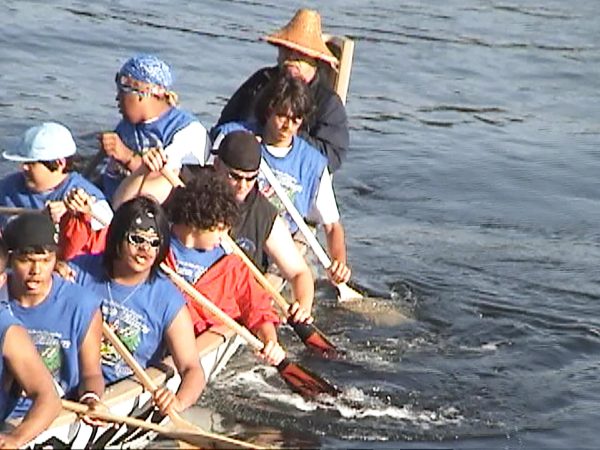
Canoe Journey comes from the pre-colonial Indigenous People, who used the waterways in the Pacific Northwest similar to today’s American highways. The modern tradition of an annual canoe journey started in 1989 with the Paddle to Seattle.
Emmet Oliver of the Quinault Nation is a member of the committee tasked with organizing Washington’s Centennial Celebration. To ensure the First Peoples of this land were recognized and pushing for the return of old traditions, he helped make the first Canoe Journey possible. Oliver died on March 7, 2016, but the tradition he helped to create continues to thrive.
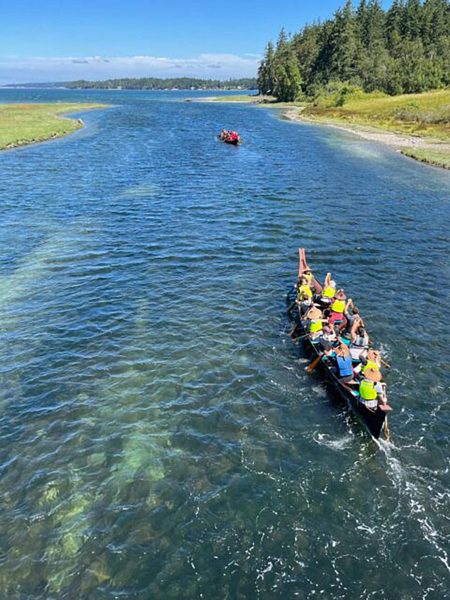
Canoe Journey brings together Indigenous communities as they celebrate the deep roots they share with the Pacific Northwest. Both of the Sherman’s described their experiences with Canoe Journey as deeply spiritual. Each year, a different Tribal Nation hosts all the Canoe Families.
A Canoe Family is the name for the Canoe Journey participants of any given tribe. This includes pullers (who paddle the boat for hours on end to reach their destinations), support crews, tribal elders and relatives. Some Canoe Families come from as far as British Columbia to participate.
Canoe Families
Canoe Families journeys involve paddling to their nearest neighbors. They ask to come ashore and stay for the night. The family celebrates the hosts by singing and dancing.
The next day more Canoe Families travel tegether, paddling to the next neighbor and ask to come ashore. Again, they camp, sing, and dance in honor of the hosts. This repeats until the final landing point at the hosting tribe’s territory where all Canoe Families land to join together in celebration.
Celebrations last for a full week while the hosting tribe provides space to camp, meals, laundry and bathing.
In honor of the Canoe Journey’s hosts, the guests dance for them and present gifts. At the end of the week, the hosts provide a potlatch, a type of festival where they give gifts to show wealth. The hosts also return the gesture by singing and dancing for their guests. Canoe Journey shows the strength and cultural devotion of the local Cascadian tribes.
Frybread
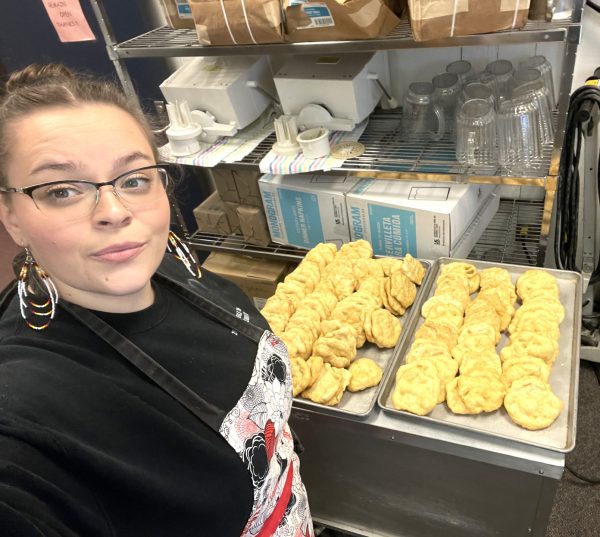
Traditionally, fry bread is a simple fried dough, akin to an elephant ear or funnel cake. Its story is anything but simple though.
The history of frybread, as explained by Martha Sherman, is connected to the painful history of U.S. colonialism and Native American genocide.
The Navajo lands were colonized by the U.S. following the Mexican-American War in 1948. The U.S. ignored the treaties they signed with the Navajo and killed those who fought back. In the 1860s the Navajo were forcibly removed when Christopher Carson burned the Navajo homelands. Starving and desperate, the Navajo people were marched by the U.S. Army some 300 miles on a journey called “The Long Walk.” They arrived at an internment camp at Bosque Redondo where the U.S. tried to reeducate these prisoners.
Native Americans were expected to embrace American cultural tenets like farming, Christianity, individualism and the English language. The goal was to eliminate Native cultures and assimilate all First Peoples living in U.S. Territory.
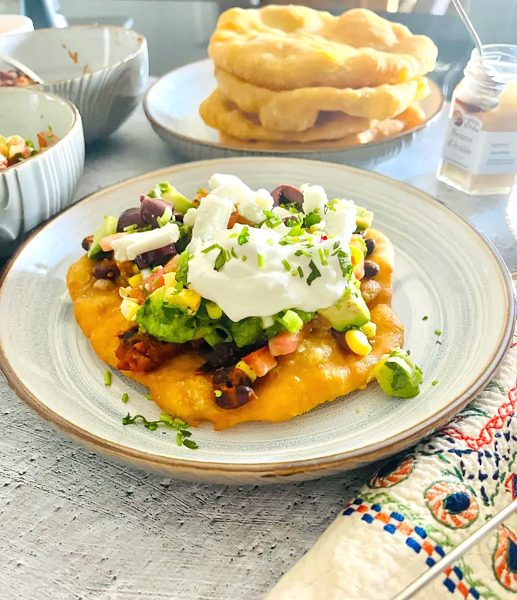
Because the land was unsuitable for farming, the government gave the Navajo people canned goods, white flour, sugar and lard. These ingredients eventually lead to the making of frybread. The recipe spread from tribe to tribe and it has become one of the most powerful symbols for Native American cultures and unity. The Shermans described one way to serve fry bread. They use venison or beef as the protein base, cheese, lettuce, sour cream and diced tomatoes to create a fry bread taco.

Paddle to Muckleshoot.
Beginning in 1989 as the Paddle to Seattle and continuing today as Paddle to Muckleshoot, Canoe Journey is a celebration of heritage and culture that connects us to our ancestors and sustains the tribe.