Students often walk into his office thinking they need help with a class. They leave, realizing they were really asking bigger questions about their future.
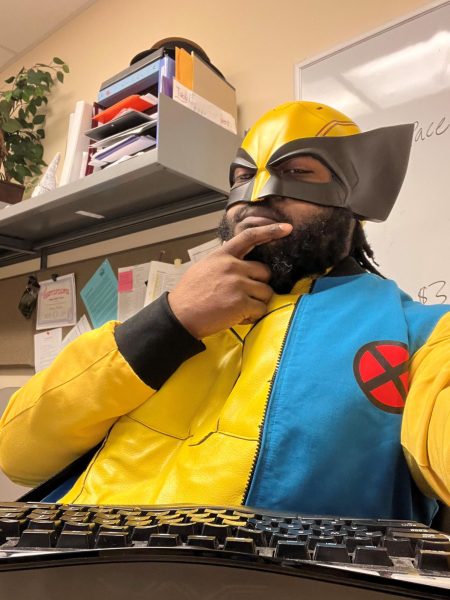
One student came in worried about switching majors, unsure if they were making the right choice or if it would set them back. From the student’s perspective, the office felt intimidating at first walls lined with books, and a whiteboard filled with notes made the space seem official, almost unapproachable. They were overwhelmed by options and anxious about disappointing their family or wasting time. As they spoke, hesitation gave way to questions, and by the end, they were sketching out ideas, connecting courses to long-term goals, and realizing they had more control than they thought. The student left with a mixture of relief and excitement; the whiteboard now has a visual map of possibilities rather than a symbol of confusion.
From his perspective, moments like these are about more than academic planning—they’re about helping students see their own capacity. He listens carefully, asks questions that encourage reflection rather than giving answers, and nudges them to trust themselves. He feels a quiet satisfaction in seeing their confidence grow, knowing the real progress is internal: a student learning to navigate uncertainty, make decisions, and take ownership of their path. “It’s not just about the major,” he says. “It’s about helping them realize they already have the tools—they just need a little guidance to see them clearly.”
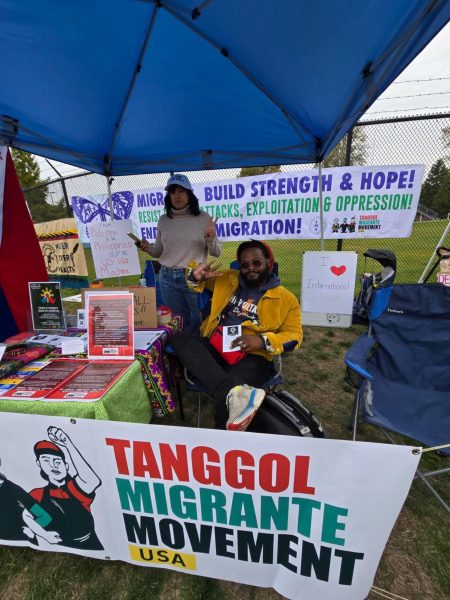
At the Northwest Detention Center, he volunteers, handing out supplies, sitting with immigrants, and listening as they talk about their lives and families. He says the work matters because it allows him to be present with people who are often ignored. “It’s about supporting people who are locked up for no reason,” he says.
One young man had lost hope. “By the time I left, he was smiling and talking about the future.”
Students sometimes come back weeks later to show projects sparked during office conversations. One student returned with a business pitch she had refined after their talk, proud to show the work she had created on her own. He stepped back, pointing to the whiteboard where ideas were first sketched, and said, “See how far you’ve come?” From his perspective, these moments are proof that learning is not just academic—it’s personal. From the students’ perspective, it’s empowering. They leave feeling validated, supported, and capable of turning their ideas into reality.
On campus, he works alongside students planning cultural events. They debate, brainstorm, adjust details late into the afternoon, and laugh over setbacks. Students learn to collaborate, handle challenges, and to take pride in their achievements. He lets their work shine, only stepping in when guidance is needed. “I want them to create something they can own,” he says. “My job is just to help them see it’s possible.”
Even in small moments, growth stands out. “One student stayed after a workshop just to tell me she finally felt confident presenting in front of her peers,” he shares. “It’s these tiny victories that keep me going.”
Outside of work, inspiration comes from simple things: a morning coffee, a walk on campus, students stopping by with a question, and painting. He discovered his love for painting one day, realizing his room was filled with unfinished canvases; proof that creativity, like education, is an ongoing process. “I just like doing it,” he says. “It reminds me that learning and growth don’t always follow a straight line.”
To him, education isn’t just about getting through classes. It’s about helping students feel seen, supported, and capable of becoming who they want to be. He encourages students to slow down, explore, and embrace change. He believes education is far more than a degree—it’s a space to grow, to discover, and to realize that every student already carries the tools they need.