Kell Gillette, a student who started attending Pierce College in the fall 2025, struggled when they tried to identify the classes they should enroll in, primarily because of their confusion when trying to navigate the advising system.
This system, Starfish, is challenging for some students who are first learning how to connect with their student success coaches.
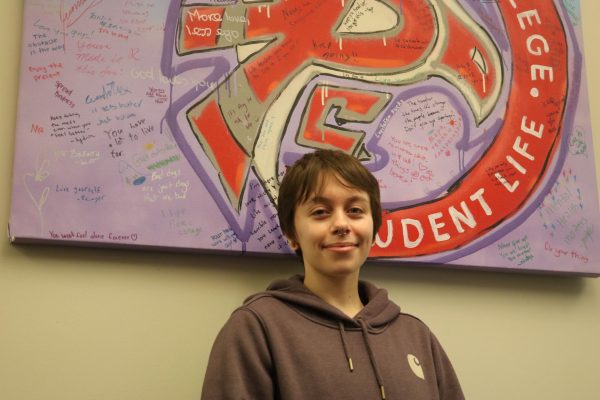
Before Gillette’s first appointment with a student success coach, they encountered some unexpected changes. The in-person appointment scheduled for May 30, 2025, was cancelled and reassigned to a different student success coach. The cancellation message was sent through Starfish, but Gillette had not been able to access that platform due to a system error.
It wasn’t until Gillette called the Puyallup campus Advising Office that they learned their appointment had been rescheduled as a phone call rather than the in-person meeting they had planned. This change was made because the student success coach they were expected to meet was out of the office attending a work conference.
The swap from an in-person meeting to a last-minute phone call with another student success coach was confusing too. Gillette intends to earn an associate of science degree at Pierce College but was told to use a degree plan for a student intending to earn an associate of arts.
“I love Pierce very much, but it’s difficult to connect with an advisor,” they said.
Stories like Gillette’s unfortunately happen from time to time, according to Pierce College officials.

Penda Samba, director of Advising and Advocacy at the Fort Steilacoom campus, and Eric Kiger, director of Advising and Advocacy at the Puyallup campus, who ultimately determine scheduling changes and student success coach switches, explained there are intentional processes designed to connect students with the right support. They said, though, that communication around those processes doesn’t always reach students as smoothly as intended.
“If a student’s appointment has to be changed from in-person to a phone or remote meeting, the most likely reason is that somebody was unable to come into the office that day,” Kiger said.
Coaches may be parents with a sick child, face transportation issues or encounter other unexpected situations.
Different things come up where unfortunately we’ll have to switch into remote operations for that particular coach,” Kiger said.
At the same time when situations like this happen, the entry services team members try to connect students with another available coach rather than leaving them without any support.
“As soon as the center is open, our entry services team will reach out to the student right away,” Samba said. “If we have another student success coach available to meet with that student, we’ll try to connect them. If not, an appointment cancellation email will be sent out immediately, and our team will work with that student to find another time that works for them.”
The college’s student advising portal, Starfish, plays a large role in such scenarios.
As Kiger explained, when an appointment is cancelled or rescheduled, Starfish automatically sends notifications to the student’s preferred email on file. However, if a student uses a different email than what’s listed in the system, or if they have trouble accessing Starfish, those notifications may not reach them.
For students experiencing Starfish access problems, Samba emphasized students have resources for tech help.
The college has dedicated technology support for Starfish, and their contact information can be found on the Pierce website at www.pierce.ctc.edu/tools/starfish/index.html. Both phone and email are available for students.
One of the most common frustrations students express is being reassigned to a different advisor. According to Samba and Kiger, these switches usually happen for specific reasons that are intended to provide better support rather than disrupting the consistency.
Since entering college, some students enter undecided on what pathway they wish to pursue. Thus, a coach is given for the time being. However, if that student then decides that they want to change their career pathway, they then have their coach switched to a new one.
As both explained, each student’s success coach specializes in particular career pathways, and when a student changes their major, they may be reassigned to a coach with more knowledge and experience in the new field.

“If a student meets with a success coach who only advises business and then mentions they want to do pre-nursing, that student will get reassigned to a pre-nursing success coach,” Samba clarified. “That new coach will reach out to introduce themselves and explain how to schedule an appointment.”
The student success coach who met with Gillette in May told them to schedule an appointment in the fall with a STEM student success coach. Gillette was able to meet with the third, and newest, student success coach on Oct. 25 to discuss their plan to earn an associate of science degree and confirm registration of classes for winter and spring term classes.
Students can initiate this process through Starfish’s “raise a hand” feature, indicating that they’d like to change their major. Samba and Kiger receive these notifications and reassign students to the appropriate coach while also submitting a program plan to change in the system.
Reassignments may also happen due to other reasons. During peak registration periods, new students may meet with whichever coach is available to ensure they get registered for classes quickly. Then after the initial appointment, they usually then get assigned to another coach that aligns with their pathway.
“Sometimes students come near the very start of the school year with very little time. So, students often would just get an advisor that’s available,” Samba said. “That coach eventually is likely to switch with another coach that better suits the student, which could make the student confused or upset.”
Another cause of advisor reassignments is staff changes. When a coach leaves the college, moves to a different position, or takes extended leave, their students are reassigned to ensure continuity of support. Kiger noted one recent example where a coach’s departure meant reassigning about 600 students to another coach.
Students that pursue nursing and other health care fields experience advisor transitions frequently.
“Student success coaches see students who are in the pre-phase, completing prerequisites and preparing to apply to the nursing program,” Samba explained. “Once students are admitted into the nursing program, faculty advisors step in to advise those students.”
This same pattern applies to dental hygiene, veterinary technology, and other pre-health care pathways. The transition from general success coaches to program-specific faculty advisors ensures students receive specialized guidance.
Samba and Kiger brought up concerns about why students struggle with advisors. One example is that students do not understand the first step of accessing advisors; many may have received a letter or an email explaining how they should log into their ctcLink and Starfish to book an appointment.
Understanding the navigation around ctcLink and Starfish is crucial to access advising effectively for students. When asked how Advising ensures students receive enough support in building that understanding, Samba mentioned the College Success course.
“All students are required to take College Success during their first or second term. In my experience, the first assignment in the first week of the course is to learn how to utilize Starfish, how to schedule an appointment, find out who your advisor is, and how to raise a hand,” Samba said. It is a course designed to mainly assist students in learning such skills. However, Samba brought up concerns about students needing additional help on using both systems.
“When this happens, we try to reach out to said students to help them,” Samba said.
Advising Center officials at both campuses are looking for student feedback to determine how they can help current and future students.
There may still be times when students find themselves confused and in need of assistance. Both Samba and Kiger offered practical suggestions for students navigating the advising system.
“Don’t be afraid to ask for help,” Samba said. “If there’s any confusion or no clarity on something, stop by the Welcome Center or the Student Success Center. We always have an entry services specialist who’s open to answer questions or guide you toward the right step.”
For students already on campus, stopping by in person is often the fastest way to get answers. If visiting in person isn’t possible, students can email or call, though they should expect potential delays, especially during peak registration periods.
“We will do our best to get back to you within one to three business days, depending on staffing levels and whether it’s during peak time,” Samba said. “But if students have any chance to swing by the welcome centers, that’s the fastest way to get help right then and there.”
In addition, Kiger mentioned that students who may feel uncomfortable discussing an issue with their assigned coach can also reach out to him or Samba directly. Both directors welcome student emails and questions.
Looking forward, Samba and Kiger emphasized that they value feedback from students about any such issues. They encourage students to share their experiences so they may continue refining their approach to provide support.
Finally, for students experiencing advising challenges, the message from both directors is that you are not alone, help is available, and your questions are important.